...

2026 Top Hex Machine Screw Types for Global Buyers

Selecting the right Hex Machine Screw in 2026 requires more than comparing prices or browsing attractive product photos. Global buyers must examine thread form, head dimensions, drive quality, material, coating, and dimensional consistency. A screw that fits one assembly may fail in another. Small differences matter.

In practical sourcing, I inspect sample screws with calipers, thread gauges, and a torque-controlled driver. The head should seat cleanly. The threads should engage without binding. Burrs, uneven plating, or shallow recesses often reveal weak process control. These details become important when thousands of fasteners enter an automated production line.

This guide explores the leading hex machine screw types for international purchasing teams. It considers stainless steel, carbon steel, alloy steel, brass, and specialized coated options. It also reviews common head styles, drive patterns, thread standards, strength markings, packaging, and traceability. Reliable suppliers should provide clear specifications, inspection records, and consistent batch information. Certifications help, but they do not replace physical verification.

Standards can differ.

Buyers should confirm whether an application requires metric or imperial threads. Regional expectations may also affect labeling, documentation, and testing. Always check the relevant engineering drawings and applicable market requirements before placing a large order. A lower unit cost can become expensive after rework, delays, or rejected shipments.

No purchasing guide can remove every uncertainty. Product availability changes. Supplier performance can vary. Even experienced teams sometimes overlook washer compatibility or tool access. That is why careful sampling, documented approval, and ongoing inspection remain valuable. The best choice is not always the cheapest screw. It is the one that performs consistently in its actual assembly.
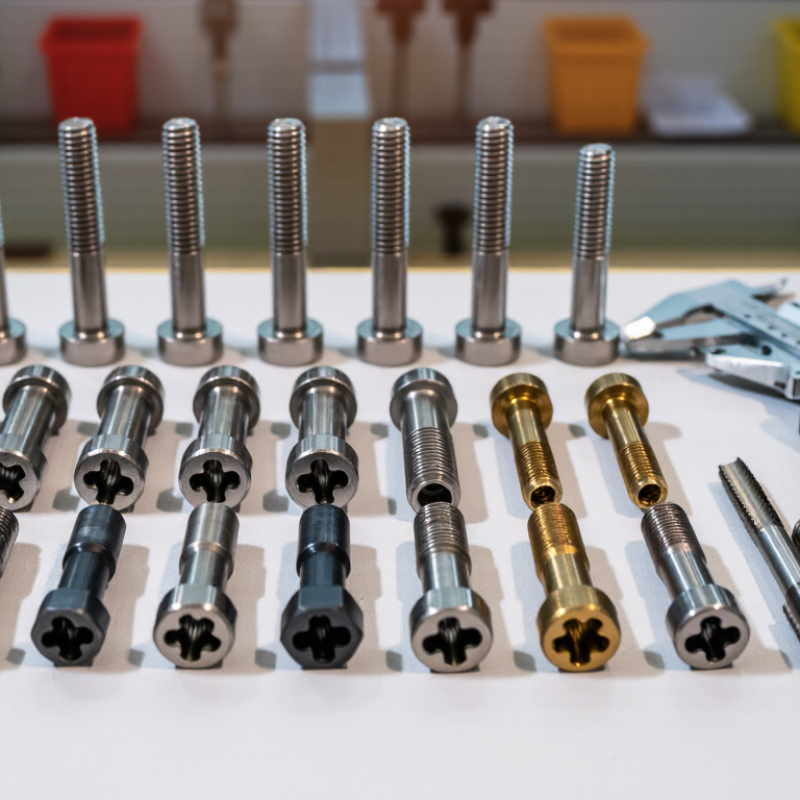
2026 Top Hex Machine Screw Types for Global Buyers

Hex Machine Screw Basics: M3–M12 Sizes and ISO 68-1 Thread Profiles

2026 Top Hex Machine Screw Types for Global Buyers

Hex machine screws from M3 to M12 cover many equipment and assembly needs. The M number identifies the nominal thread diameter, not the head size. Typical coarse pitches range from 0.5 mm on M3 to 1.75 mm on M12. Pitch must be confirmed before ordering.

ISO 68-1 defines the basic metric thread profile. It uses a 60-degree flank angle and controlled crest and root geometry. This profile supports predictable engagement between the screw and mating nut. However, ISO 68-1 does not define every tolerance class or finished screw dimension. That detail requires the selected product standard and drawing.

A thread gauge is not optional. Small errors matter. During inspection, measure the diameter, pitch, thread length, and hex head dimensions separately. I once treated an M8 coarse thread as interchangeable with a fine thread. It was not. The screw entered the hole, then stopped under load. For M3 and M4 parts, handling damage can distort the first thread. For M10 and M12 screws, torque and joint design deserve closer review. Plated surfaces may also change fit slightly. Buyers should request material, strength class, tolerance, coating, and inspection records before approving production samples. Supplier documents help, but physical samples still deserve careful checking.

2026 Top Hex Machine Screw Types for Global Buyers — Hex Machine Screw Basics: M3–M12 Sizes and ISO 68-1 Thread Profiles
Metric Size ISO Metric Thread Designation Coarse Pitch
(mm)
ISO 68-1 Profile Angle Basic Major Diameter
(mm)
Typical Hex Across Flats*
(mm)
Recommended Clearance Hole**
(mm)
Tensile Stress Area
(mm²)
Common Application Category
M3 M3 × 0.5 0.50 60° 3.00 5.5 3.4 5.03 Compact electronics, light-duty brackets, small instrument assemblies
M4 M4 × 0.7 0.70 60° 4.00 7 4.5 8.78 General equipment panels, enclosures, machinery guards
M5 M5 × 0.8 0.80 60° 5.00 8 5.5 14.2 Fixtures, hardware assemblies, automotive and industrial components
M6 M6 × 1.0 1.00 60° 6.00 10 6.6 20.1 Machine frames, equipment mounts, medium-duty structural joints
M8 M8 × 1.25 1.25 60° 8.00 13 9.0 36.6 Industrial machinery, mounting rails, steel and aluminum assemblies
M10 M10 × 1.5 1.50 60° 10.00 16 11.0 58.0 Heavy equipment, structural brackets, machinery connections
M12 M12 × 1.75 1.75 60° 12.00 18 13.2 84.3 High-load frames, industrial platforms, transport and construction equipment
Technical notes: ISO 68-1 defines the basic profile of ISO metric screw threads with a 60° flank angle. The listed pitches are standard coarse-pitch values for the stated nominal diameters. Hex across-flats values are typical references for standard hex-head metric screw geometry and may vary by product standard or head style. Clearance-hole values are practical medium-fit references based on common ISO metric hole-sizing practice; final selection should consider fit, coating, tolerance, and assembly requirements. Tensile stress areas are nominal calculation values for standard coarse threads.

Hex Head, Flange, and Socket Types Classified by ISO 4017 and ISO 4762

2026 Top Hex Machine Screw Types for Global Buyers

Hex Head, Flange, and Socket Types Classified by ISO 4017 and ISO 4762

Global buyers need more than a familiar screw shape. They need a dependable standard reference. ISO 4017 defines fully threaded hexagon head screws for many general fastening applications. Their external six-sided head accepts a wrench directly. That helps when access is open and torque must be checked quickly. Full threading can also support flexible grip lengths. Small detail. Check the required thread length carefully.

ISO 4762 covers hexagon socket head cap screws. These screws have a cylindrical head and an internal hexagonal drive. They work well in compact assemblies where a normal wrench cannot reach. The socket keeps the outer profile smaller. Correct tool engagement matters, especially during repeated installation. A shallow or worn socket can damage the recess. This point is often underestimated.

Flange screws add an integral flange beneath the head.

The flange spreads pressure across a wider surface and may reduce the need for separate washers. However, flange geometry is not automatically classified by ISO 4017 or ISO 4762. Buyers should request the exact flange standard, dimensions, thread tolerance, and material grade. Do not assume similar heads perform identically. Compare drawings, not photographs.

A practical purchasing mistake is choosing by diameter alone. Real assemblies also depend on clamp length, clearance, coating thickness, and tightening conditions. Specification reviews can feel slow, but missing one detail becomes expensive later.

Material Grades Compared: ISO 898-1 Classes 8.8, 10.9, and 12.9

2026 Top Hex Machine Screw Types for Global Buyers

Material choice determines whether a hex machine screw survives real service. ISO 898-1 class 8.8 suits many general industrial assemblies. It offers dependable strength without excessive cost. Class 10.9 provides higher tensile and proof loads for demanding joints. Class 12.9 delivers the highest strength among these three grades. However, maximum strength is not automatically the safest choice. A stronger screw can fail suddenly if preload, thread engagement, or joint stiffness is poorly controlled.

From practical sourcing experience, class 8.8 works well for frames, brackets, and equipment covers. Class 10.9 is more suitable for vibration, heavy clamping, and structural connections. Class 12.9 may fit compact, highly loaded assemblies, but engineers must check fatigue and brittleness risks. Corrosion protection also matters. Coatings can influence friction and tightening torque. I once treated 12.9 as the obvious upgrade. That decision ignored the softer mating material and caused thread damage during testing. The lesson was uncomfortable, but useful.

Tips: Confirm the property class on certificates and product markings. Compare tensile strength, proof load, hardness, and dimensional standards. Use calibrated torque methods, not guesswork. Check whether the screw enters aluminum, steel, or a tapped blind hole. A supplier should provide traceable inspection records and material documentation. Do not rely on appearance alone. Small differences in heat treatment can change performance significantly.

Metric, UNC, and UNF Threads: ISO 261 and ASME B1.1 Selection Guide

For global buyers, hex machine screw selection starts with thread standard, not head shape. Metric threads follow ISO 261, which defines preferred diameter and pitch combinations. An M8 × 1.25 screw has an 8 mm nominal diameter and 1.25 mm pitch. Coarse metric pitches suit general assembly and tolerate minor contamination. Fine pitches provide smaller adjustment and stronger engagement per length. They need cleaner handling and careful inspection. Confirm the mating nut or tapped hole before ordering. A drawing alone is not enough.

In inch-based projects, ASME B1.1 governs Unified threads. UNC uses a coarser pitch, while UNF uses more threads per inch. UNC often simplifies assembly in larger structural parts. UNF can support precise adjustment and improved clamp control.

Do not interchange UNC, UNF, and metric screws. They may appear similar on a busy production line. A metric M6 screw cannot replace a 1/4-20 screw safely. Check nominal diameter, pitch, thread class, length, and bearing surface. Measure twice.

A reliable purchasing process records the standard, size, tolerance, material, coating, and inspection method. Request dimensional reports and verify samples with calibrated thread gauges. Check the screw under actual load, especially in deep holes or restricted spaces. Plating can influence fit. It happens.

In my view, many sourcing errors begin with assumed equivalence, not poor hardware. Even a clean specification may contain an untested assumption. Recheck drawings, gauge readings, and assembly feedback before approving volume production.

Global Buyer Checklist: ASTM F568M, RoHS, REACH, and Coating Requirements

2026 Top Hex Machine Screw Types for Global Buyers

For 2026 sourcing, hex machine screws need more than the correct thread and head size. Buyers should request material certificates, dimensional inspection records, and coating test results. ASTM F568M is important for metric carbon and alloy steel fasteners, but its status must be checked carefully. The standard was withdrawn, so contracts should identify the required edition or replacement specification. This detail is often missed. It can create confusion during third-party inspections.

RoHS compliance mainly affects screws supplied within electrical and electronic equipment. The European Commission’s RoHS framework restricts ten substances, including lead, mercury, cadmium, and certain flame retardants. Ask for a current declaration, not a general “RoHS approved” statement.

REACH requires deeper chemical review. ECHA reported 241 substances of very high concern on its Candidate List in June 2024. Coating suppliers should disclose restricted substances, plating chemistry, and any exemption basis.

Zinc plating, black oxide, and zinc-nickel coatings can perform differently in salt spray testing. ASTM B117 results are useful, but they do not predict every outdoor environment. I have seen buyers accept a high-hour result while ignoring cut edges and thread damage. That was a weak decision. Require coating thickness readings, adhesion evidence, and batch traceability. Salt spray is only one piece of evidence.

Seraphinite AcceleratorOptimized by Seraphinite Accelerator
Turns on site high speed to be attractive for people and search engines.