...

What Is Bathroom Hardware and What Types Do Buyers Need?

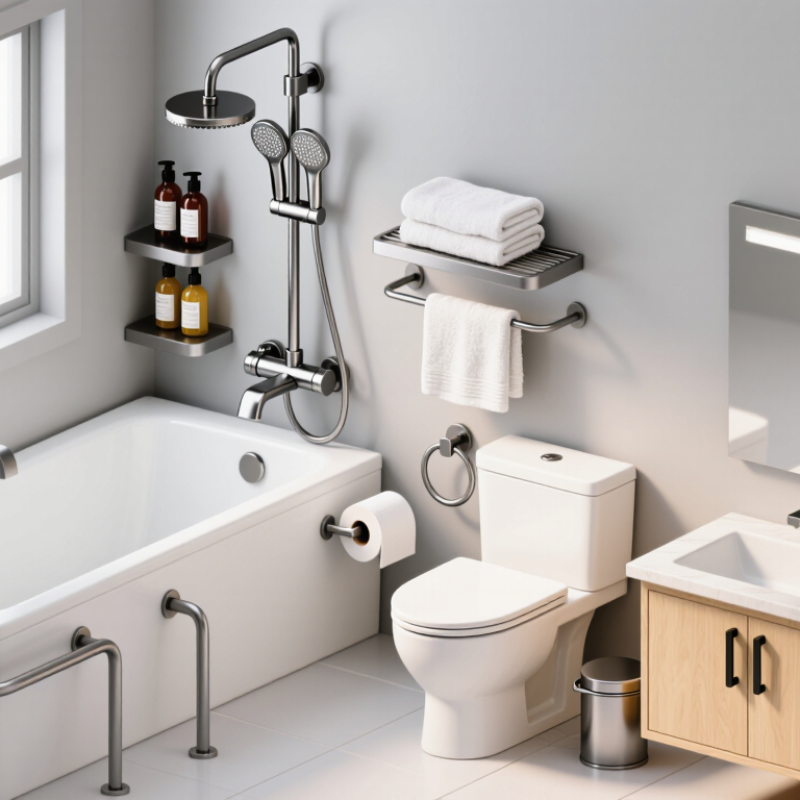
Bathroom Hardware includes the practical fixtures that make a bathroom safer, more organized, and easier to use. This category covers towel bars, robe hooks, toilet paper holders, shower shelves, grab bars, cabinet pulls, and bathroom accessories. Each item has a specific purpose, yet buyers often judge products by appearance alone. That can be an expensive mistake.

A reliable buying decision starts with daily use. A family bathroom may need sturdy towel bars, rounded hooks, and storage that withstands wet hands. A compact powder room may only need a toilet paper holder and one small towel ring. In a shower, stainless steel shelves should resist rust and hold their stated weight. Grab bars require secure wall reinforcement, correct placement, and clear installation guidance. Finish matters too. Brushed nickel hides fingerprints, while polished chrome reflects more light but shows water spots quickly.

Good advice should come from more than product descriptions. It should consider material quality, mounting methods, cleaning routines, and the user’s physical needs. Small details matter. A loose wall anchor can damage tile and reduce confidence. Some attractive products feel solid in photographs but use thin metal in practice. That deserves honest attention. Buyers should compare dimensions, warranty terms, load ratings, and verified reviews before purchasing. Local building requirements may also affect grab bar installation, so professional guidance is wise when safety is involved. The best Bathroom Hardware choice is not always the most expensive. It is the option that fits the room, supports real use, and remains dependable after months of steam, splashes, and repeated handling.
What Is Bathroom Hardware and What Types Do Buyers Need?

Bathroom Hardware Defined: Five Core Categories Buyers Should Recognize

Bathroom hardware is more than a matching towel bar. It includes the functional metal and fittings that control water, support storage, and improve daily safety. Buyers should recognize five core categories: faucets and spouts, shower and tub controls, cabinet knobs and pulls, towel and storage accessories, and toilet or support hardware.

Each category solves a different problem. Faucets need suitable reach, mounting, and water-flow performance. Shower controls should offer clear temperature adjustment and durable seals. Cabinet pulls must fit drawer thickness and hand clearance. Towel bars, hooks, and shelves require secure wall anchoring, especially near wet surfaces. Grab bars and toilet paper holders should be selected for stability, not appearance alone. Houzz’s 2024 U.S. Bathroom Trends Study reports that 84% of renovating homeowners upgraded their showers, showing how strongly buyers prioritize shower performance and comfort. The National Kitchen & Bath Association’s 2024 Bathroom Design Trends Research also highlights wellness and accessibility as continuing design priorities.

In practice, finish matching is often overvalued. A beautiful brushed finish cannot correct poor spacing or weak installation. Measure the wall, door swing, vanity depth, and stud locations before ordering. I have seen small bathrooms become awkward because accessories were placed too close together. That mistake is easy to make. The U.S. Consumer Product Safety Commission also emphasizes secure bathroom grab-bar installation, yet many buyers treat support hardware as decoration. Product specifications, corrosion resistance, warranty terms, and professional installation deserve equal attention. Trends change; bathroom movement does not.

What Is Bathroom Hardware and What Types Do Buyers Need?

Bathroom hardware includes the functional fittings and accessories used for water control, showering, storage, toilet operation, and everyday convenience. The chart shows the number of representative hardware items commonly considered within each core category.

The five categories cover the main buyer decisions: faucets, shower hardware, bathroom accessories, cabinet hardware, and toilet hardware. The figures represent typical product examples in each category, not market-share data.

Faucets and Showerheads: Compare EPA WaterSense Limits of 1.5–2.0 GPM

What Is Bathroom Hardware and What Types Do Buyers Need?

Bathroom hardware includes faucets, showerheads, drains, towel bars, robe hooks, and cabinet fittings. Among these items, faucets and showerheads deserve careful water-use comparisons. They affect daily comfort, utility costs, and long-term household efficiency.

For products carrying the WaterSense label, bathroom faucets use no more than 1.5 gallons per minute at 60 psi. Showerheads use no more than 2.0 gallons per minute at 80 psi. These limits can reduce unnecessary flow without making the spray feel weak. Still, performance depends on water pressure, pipe condition, and the fixture’s internal design. A low-flow faucet may feel slow in an older home. That is not always a product problem. It may reveal restricted plumbing or a clogged aerator. Buyers should check flow-rate details, pressure requirements, and installation instructions before purchasing.

Tips:

Place a measuring container under the faucet for ten seconds. Multiply the collected volume to estimate its flow rate. Clean the aerator before judging performance. For showerheads, compare spray patterns, angle adjustment, and temperature stability. A lower number is useful, but comfort matters too. I would not choose the lowest flow rate automatically. A fixture that encourages longer showers may waste more water overall.

Safety Hardware: Apply ADA Grab-Bar Rules for 33–36-Inch Mounting

Bathroom hardware includes grab bars, towel rails, robe hooks, toilet paper holders, and shower accessories. Buyers often focus on finish and shape first. That can be a mistake. In daily use, secure mounting, comfortable grip, and correct placement matter more than appearance. A loose grab bar near a wet shower floor creates real risk, even when it looks professionally installed.

For many accessible toilet installations, ADA guidance places the top of the grab-bar gripping surface 33 to 36 inches above the finished floor. Measure from the completed floor, not the subfloor. The bar must also support the required load through proper blocking or structural fasteners. Placement depends on the wall, toilet layout, and user movement. Local rules may differ, especially in private homes. A qualified installer should verify the details before drilling. A neat-looking bar can still fail.

Tips: Mark the 33–36-inch range with painter’s tape. Sit on the toilet and test the reach before installation. Check door swings, transfer space, and nearby fixtures. Avoid placing hardware where a towel, valve, or cabinet interrupts the grip. Small errors matter. Recheck measurements after tile installation, because finished surfaces can change the final height.

Cabinet and Door Hardware: Match Materials, Sizes, and Corrosion Ratings

Bathroom hardware includes the small working parts that make a bathroom usable: cabinet pulls, knobs, hinges, towel bars, hooks, and door handles. Material matching matters because humidity reaches every joint. The NACE IMPACT study estimates corrosion costs about $2.5 trillion worldwide each year, equal to 3.4% of global GDP. That figure makes cheap finishes less attractive.

For cabinet hardware, stainless steel or solid brass usually suits damp rooms better than unprotected steel. Match the finish across pulls, hinges, and exposed screws. Size also affects daily use. A pull should allow two fingers behind it, while a door handle needs enough clearance from the wall. Measure the existing hole spacing before ordering. I have seen attractive replacements fail because the new pull covered only part of an old finish mark. Small detail. For coastal bathrooms, request a corrosion rating and test method, not only “rust resistant.” ISO 9227 salt-spray testing can compare finishes, but its hours do not predict exact household service life.

Tips: Keep cabinet pulls at least 32 mm from corners. Choose concealed hinges with adjustable tension. Ask whether the core material matches the surface coating. A thin decorative layer over mild steel may chip at screw holes. The 2024 U.S. Houzz Bathroom Trends Study also shows that homeowners continue investing in upgraded bathroom features, making durable hardware a practical renovation choice. Test one sample beside the shower first. It may look different after repeated cleaning.

What Is Bathroom Hardware and What Types Do Buyers Need? - Cabinet and Door Hardware: Match Materials, Sizes, and Corrosion Ratings

Hardware Type Typical Bathroom Use Recommended Materials Common Sizes Indicative Corrosion Resistance Buyer Checkpoints
Cabinet Pulls Vanity doors and drawers 304 stainless steel, solid brass, or zinc alloy with a sealed finish Center-to-center: 76–320 mm; overall length: approximately 100–350 mm Medium to high when seams and finish are sealed Match the existing hole spacing; confirm screw length and clearance behind the cabinet front.
Cabinet Knobs Small vanity doors and shallow drawers Solid brass, 304 stainless steel, or coated zinc alloy Diameter: 25–40 mm; base diameter: about 20–30 mm Medium to high, depending on plating and maintenance Choose a broad base for thin panels and avoid exposed unsealed steel in wet zones.
Concealed Cabinet Hinges Overlay or inset vanity cabinet doors Nickel-plated steel for dry interiors; stainless steel for humid bathrooms Common cup size: 35 mm; opening angle: approximately 100–110° Medium for plated steel; high for stainless steel Verify overlay, door thickness, cup depth, mounting pattern, and soft-close requirements.
Drawer Slides Vanity drawers and pull-out storage Zinc-plated steel for protected areas; epoxy-coated or stainless steel for high humidity Lengths: 250–600 mm; common extension: 3/4 or full extension Medium for standard plated steel; high for stainless steel Check load rating, side clearance, drawer length, soft-close action, and resistance to standing water.
Door Lever Handles Bathroom privacy doors and passage doors Solid brass, 304 stainless steel, or aluminum with a durable protective finish Lever length: approximately 100–130 mm; spindle: commonly 8 mm square Medium to high, based on substrate and finish Confirm door thickness, backset, privacy function, return-to-door design, and accessibility needs.
Privacy Locksets Interior bathroom doors requiring emergency release Brass or stainless steel chassis with corrosion-resistant trim Typical backset: 60 or 70 mm; standard door thickness: about 35–45 mm Medium to high when internal components are protected Look for clear occupancy indication, emergency release, latch compatibility, and smooth operation.
Door Hinges Bathroom and shower-room doors 304 stainless steel or brass; use 316 stainless steel in coastal or highly humid locations Common sizes: 75 × 50 mm, 100 × 75 mm, and 100 × 100 mm High for stainless steel; grade 316 offers improved chloride resistance Confirm door weight, thickness, screw pattern, radius or square corners, and required quantity.
Towel Bars and Rings Hand towels and bath towels 304 stainless steel, brass, or aluminum with a sealed powder-coated finish Bar lengths: 450, 600, or 750 mm; ring diameter: approximately 170–220 mm Medium to high, depending on finish quality Check wall substrate, mounting plate strength, projection from the wall, and concealed fasteners.
Robe Hooks Robes, clothing, and small towels 304 stainless steel, brass, or die-cast zinc with sealed plating Projection: approximately 35–65 mm; base diameter: about 40–55 mm Medium to high Avoid sharp edges, verify fixing strength, and leave enough spacing to prevent fabric overlap.
Toilet Paper Holders Toilet paper storage and dispensing 304 stainless steel, brass, or aluminum with a moisture-resistant finish Overall width: approximately 150–190 mm; projection: 60–90 mm Medium to high Confirm roll clearance, open or closed-end design, mounting direction, and cleaning access.
Grab Bars Safety support near toilets and showers 304 or 316 stainless steel with concealed or exposed structural flanges Common lengths: 300–900 mm; outside diameter: approximately 32–38 mm High; structural fixing is more important than decorative finish Select products designed for load-bearing use and fasten into suitable blocking or structural supports.
Shower Door Hardware Glass shower doors, pivots, handles, and clamps 316 stainless steel or brass with a fully sealed finish Handle centers: approximately 150–300 mm; glass thickness: commonly 8–12 mm High; 316 stainless steel is preferable where chlorides are present Confirm glass thickness, door weight, drilling requirements, gasket compatibility, and drainage exposure.

Corrosion ratings are indicative buying guidance rather than universal certification grades. Actual performance depends on the base material, coating system, edge sealing, installation quality, cleaning chemicals, humidity, salt exposure, and maintenance.

Buying Checklist: Verify 250-Pound Grab-Bar Capacity and Installation Fit

Bathroom hardware includes grab bars, towel rails, robe hooks, shower seats, and door hardware. Buyers should treat grab bars as safety equipment, not decoration. The CDC reports that more than 3 million older adults receive emergency treatment for fall injuries in the United States each year. A secure bathroom layout can reduce risky reaching and unstable stepping. Still, hardware alone cannot prevent every fall.

For a grab bar, verify a tested 250-pound support capacity. Confirm that the rating applies to the complete installation, not only the metal bar. The bar must connect to structural blocking or another approved support system. Tile thickness, wall cavities, stud spacing, and fastener length can change the result. The National Institute on Aging recommends properly installed grab bars near toilets and inside showers. That guidance sounds simple. Real bathrooms are less forgiving. A strong bar can fail when installed into weak backing.

Tips: Measure before buying. Check the wall structure. Confirm the bar’s length, diameter, clearance, and load rating. Ask a qualified installer to inspect the mounting surface. The 250-pound figure is not a target for testing; it is a safety requirement. Also check whether users can grip the surface with wet hands. A slightly imperfect fit may look acceptable, but it deserves another review. Use manufacturer installation instructions and relevant accessibility guidance for the final decision.

Seraphinite AcceleratorOptimized by Seraphinite Accelerator
Turns on site high speed to be attractive for people and search engines.