2025 How to Build the Perfect Home Deck: Tips, Ideas, and Trends
In the pursuit of enhancing outdoor living spaces, the concept of a home deck has become a pivotal focus for homeowners and designers alike. According to Mark Jensen, a renowned expert in outdoor landscaping, “A well-designed home deck serves as an extension of your living space, blending functionality with elegance.” As we look ahead to 2025, the trends and ideas surrounding home decks continue to evolve, offering a variety of possibilities for personalization and enjoyment.
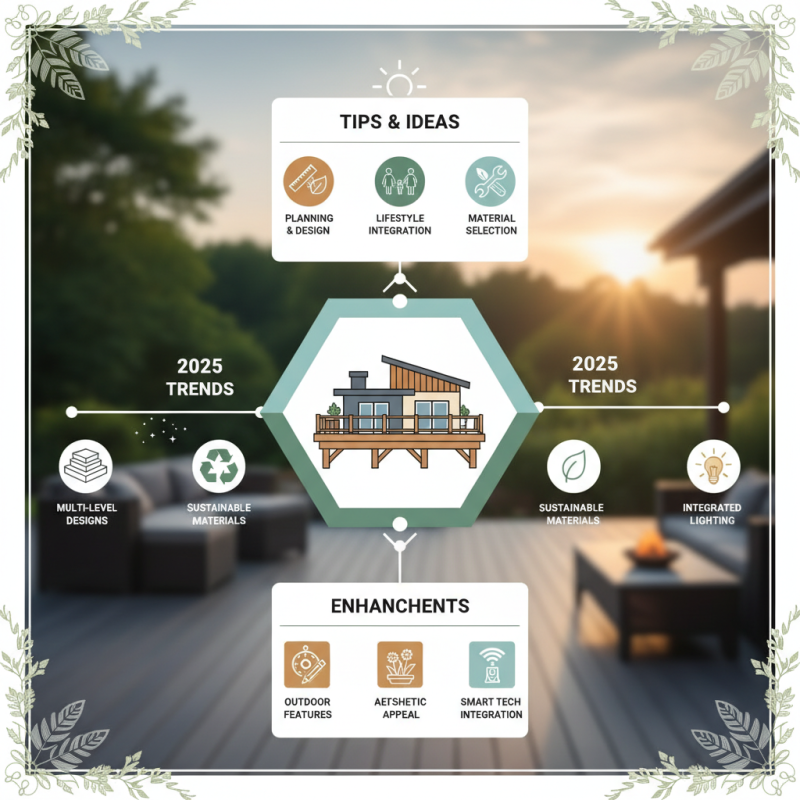
Creating the perfect home deck involves understanding the unique dynamics of one’s surroundings and the lifestyle it must accommodate. Whether it's hosting summer barbecues, enjoying quiet evenings under the stars, or simply serving as a family gathering spot, a deck can transform the way we experience our homes. Incorporating current trends such as sustainable materials, multi-level designs, and integrated lighting can not only enhance the deck's appeal but also its longevity.
As we delve into the tips, ideas, and emerging trends for building the ideal home deck, this guide aims to equip homeowners with the knowledge and inspiration needed to design a space that reflects their vision and meets their needs. From innovative layouts to aesthetic enhancements, the possibilities for a stunning home deck are virtually endless.
Understanding Home Deck Essentials: Size, Material, and Style Choices
When planning to build the perfect home deck, understanding the essentials of size, material, and style choices is crucial. The size of your deck should be determined by several factors including the space available in your yard, your intended use, and how many people you wish to accommodate. A larger deck allows for more seating and possibly additional features like outdoor kitchens or fire pits, while a smaller deck can create an intimate setting perfect for quiet evenings. Proper planning and layout are key to ensuring functionality without overwhelming your outdoor space.
In terms of materials, you have a variety of options ranging from traditional wood to low-maintenance composite materials. Wooden decks offer natural beauty and warmth, while composite materials provide durability and are less prone to weathering and fading. Your choice should also reflect your personal style and the architectural elements of your home. Lastly, style choices such as railings, lighting, and flooring patterns contribute to the overall aesthetics. Whether opting for a sleek modern design or a rustic cottage feel, each element should work together to create a cohesive outdoor living area that enhances your home's charm.
2025 How to Build the Perfect Home Deck: Tips, Ideas, and Trends
| Dimension |
Material |
Style |
Average Cost ($) |
Durability (Years) |
Maintenance Level |
| 10x10 ft |
Composite |
Modern |
4500 |
25 |
Low |
| 12x12 ft |
Wood |
Traditional |
3500 |
15 |
Medium |
| 14x14 ft |
PVC |
Contemporary |
5500 |
30 |
Low |
| 16x16 ft |
Aluminum |
Industrial |
7000 |
50 |
Very Low |
Latest Trends in Home Deck Design for 2025: Sustainability and Functionality
As we move into 2025, the home deck remains an essential extension of our living spaces, merging the indoors with the outdoors. The latest trends in deck design emphasize
sustainability and functionality. Homeowners are increasingly turning to eco-friendly materials such as reclaimed wood, composite lumber made from recycled plastics, and non-toxic finishes. These materials not only reduce environmental impact but also contribute to long-lasting structures that require minimal maintenance. The use of permeable decking can also enhance water drainage and promote healthier plant growth beneath the deck, creating a harmonious blend of aesthetics and ecological responsibility.
Functionality takes center stage in 2025's deck designs, with an eye toward creating multi-purpose spaces. Homeowners are seeking to maximize the usability of their decks by incorporating features like outdoor kitchens, integrated seating, and flexible lighting solutions. The inclusion of smart technology allows for effortless control of ambiance, security, and even irrigation systems. This trend not only enriches the deck experience but also makes it an ideal setting for gatherings, relaxation, and entertainment. Additionally, modular designs are gaining popularity, providing the flexibility to adapt spaces according to varying needs, making outdoor living not just a seasonal pleasure but a year-round retreat.
Step-by-Step Guide to Planning Your Perfect Home Deck Layout
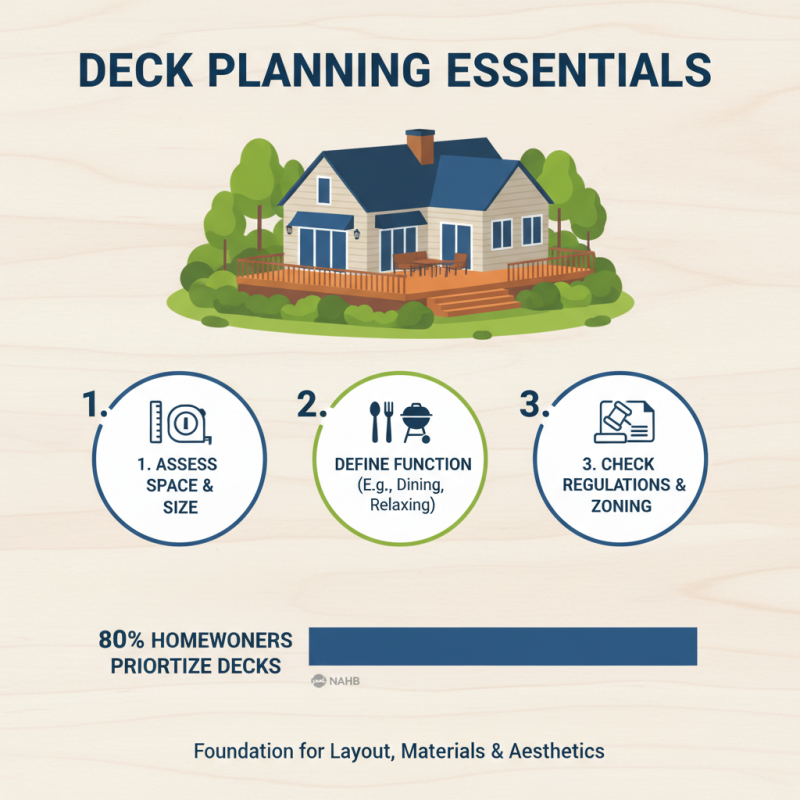
When planning your perfect home deck layout, it’s essential to start with a clear understanding of your space and needs. According to the National Association of Home Builders (NAHB), outdoor living spaces have increasingly gained popularity, with about 80% of homeowners prioritizing decks as essential additions to their properties. Begin by assessing the size of your yard, the deck's intended function—whether it's for entertaining, dining, or relaxing—and any zoning regulations that may affect the design. This foundational planning is crucial as it guides the layout, materials, and overall aesthetics of your deck.
Next, consider the flow and accessibility of your deck. The American Society of Landscape Architects (ASLA) reports that a majority of homeowners (over 60%) emphasize seamless transitions between indoor and outdoor spaces. Deck layouts should facilitate easy movement, ensuring that furniture placement allows for comfortable circulation. Incorporate elements such as built-in seating, planters, and lighting to enhance functionality and ambiance while also reflecting current trends, which emphasize sustainable materials and designs that blend with the natural landscape. By taking these steps, you can create a deck that not only complements your home but also elevates your outdoor living experience.
Incorporating Outdoor Living Features: Furniture, Lighting, and Accessories
Creating the perfect home deck involves carefully selecting outdoor living features that enhance comfort and style. Furniture plays a crucial role in achieving a cozy atmosphere. Opt for high-quality materials that can withstand the elements, such as weather-resistant wicker or aluminum. Incorporate various seating options like lounge chairs, sofas, and dining sets to accommodate different activities, whether it’s a casual gathering or an elegant dinner party. Adding cushions and throws can elevate the comfort level, making the space inviting for relaxation.
Lighting is essential for setting the mood on your deck, especially for evening use. Consider a combination of ambient, task, and accent lighting to create a warm and welcoming environment. String lights or lanterns can add a magical touch, while built-in LED lighting around steps or seating areas enhances safety without sacrificing style. Additionally, natural lighting through the use of canopies or umbrellas can help create a shaded area during the day, allowing for comfortable outdoor enjoyment.
Accessories provide the finishing touches that personalize your deck. Incorporate outdoor rugs to define spaces, and add potted plants to bring nature closer. Fire pits or outdoor heaters can extend the usability of the deck during cooler evenings. Don’t forget about functional elements like side tables for convenience and umbrellas for sun protection. By thoughtfully integrating these features, you can craft an inviting outdoor space that reflects your personal style and meets your family's needs.
Maintenance Tips for Long-lasting Home Decks: Care and Upkeep Strategies
Maintaining a home deck is essential for ensuring its longevity and enhancing its aesthetic appeal. According to a report by the Decking Industry Association, nearly 80% of homeowners prioritize outdoor living spaces, which makes regular maintenance critical. Simple upkeep tasks, like cleaning and sealing the deck, can significantly prolong its lifespan. It's recommended to clean your deck at least twice a year, using a gentle cleanser to avoid damaging the materials. Furthermore, applying a protective sealant every two to three years can help shield the deck from moisture and UV rays, ultimately reducing the risk of warping or fading.
In addition to regular cleaning and sealing, homeowners should also be vigilant about inspecting their decks for any signs of wear or damage. The American Society of Home Inspectors suggests checking for loose boards, rusting fasteners, or mold growth—a common issue in humid climates. Addressing these problems early can prevent costly repairs down the line. To further enhance durability, consider utilizing materials like composite decking, which offers enhanced resistance to rot and insects compared to traditional wood. By implementing these care and upkeep strategies, you can ensure your deck remains a beautiful and functional space for years to come.