China remains a major furniture manufacturing center, supported by mature metalworking, woodworking, and finishing supply chains. CSIL’s World Furniture Outlook 2024 identifies Asia as the largest regional furniture production base. Grand View Research also valued the global furniture market at approximately USD 516.66 billion in 2022. These figures do not isolate Custom Table Legs, but they show the scale behind China’s supplier ecosystem.
Small component. Significant consequence.
Custom Table Legs influence stability, visual balance, installation speed, and long-term customer satisfaction. Furniture designer and educator David Savage explains, “Strong furniture starts with honest structure.” The wording is simple, but the lesson is practical. A polished finish cannot repair weak welds or inaccurate mounting plates.
This guide examines China’s leading Custom Table Legs manufacturers and suppliers through measurable criteria. These include steel or aluminum grade, tube thickness, weld consistency, powder-coating performance, load testing, CAD support, minimum order quantities, and packaging protection. ISO 9001 certification may strengthen confidence, but it should not replace factory audits or sample inspections.
The category is less transparent than it should be. Some suppliers publish attractive photographs without sharing tolerances, testing methods, or material specifications. Buyers should ask for drawings, coating samples, production records, and pre-shipment inspection reports. A 2-millimeter alignment error can become obvious when four legs meet a tabletop.
China offers scale and customization. It also demands careful verification. This introduction helps purchasing teams compare suppliers with greater confidence, while recognizing that price alone rarely predicts dependable performance.
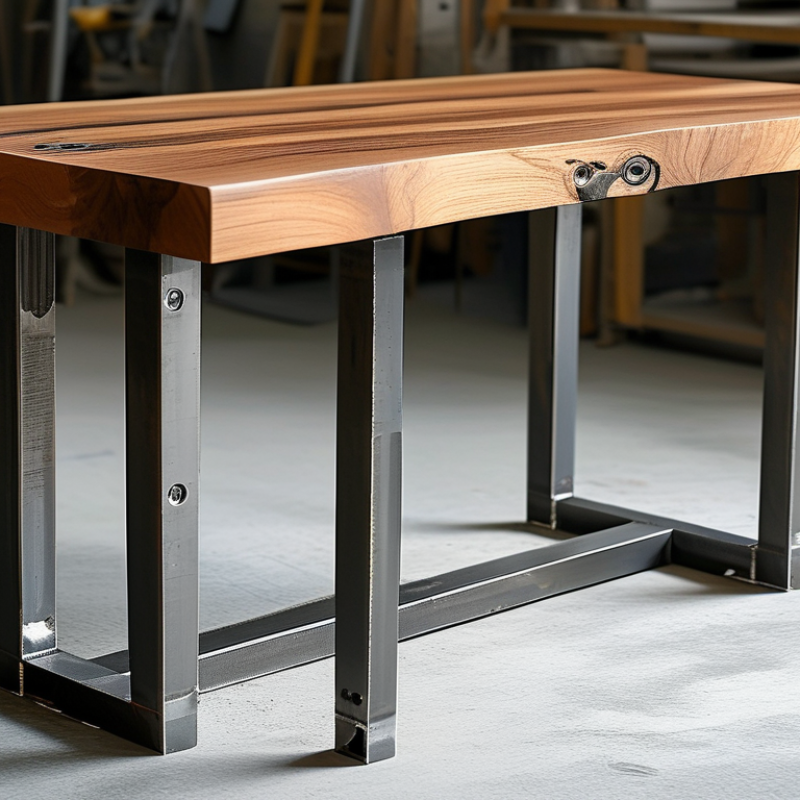
China’s custom table legs manufacturing industry serves furniture makers, interior contractors, and independent designers worldwide. Production ranges from steel and aluminum to solid wood and engineered materials. Many factories combine CNC cutting, robotic welding, manual polishing, and powder coating. This mixed approach supports both large orders and small custom runs.
Experienced suppliers usually begin with drawings, load requirements, finish samples, and installation details. They can adjust height, thread size, mounting plates, taper, and protective feet. Reliable manufacturers also provide prototypes before mass production.
Factory inspections should check weld consistency, coating thickness, dimensional accuracy, and packaging strength. These details matter when table legs travel long distances.
The industry is efficient, but not flawless. Some suppliers communicate well yet underestimate packaging risks. Others offer attractive samples but struggle with repeatable quality. Buyers should request material certificates, inspection records, and clear tolerance ranges. A practical supplier will discuss weaknesses instead of promising perfection. Environmental expectations are also changing. Water-based finishes, recyclable steel, and reduced packaging are gaining attention, although adoption remains uneven. In my experience, the best results come from direct technical communication and written approval at every production stage. Small misunderstandings can become expensive when thousands of legs are already finished.
China’s custom table-leg suppliers commonly work with steel, aluminum, solid wood, and engineered wood. Material choice affects strength, weight, machining, and shipping cost. The FAO’s Global Forest Products Facts and Figures 2023 reports global roundwood production at about 3.9 billion cubic meters in 2022. This supports wood’s continuing industrial relevance, but moisture control remains critical. Kiln-dried timber reduces warping risks, although poor sealing can still cause movement.
Steel legs usually begin with laser-cut tubes or plates, followed by bending, welding, grinding, and powder coating. Aluminum legs may use extrusion, die casting, or CNC machining. The International Aluminium Institute states that recycled aluminum requires about 95% less energy than primary production. That advantage matters for lightweight commercial furniture. However, recycled content can vary, and suppliers should provide material declarations instead of vague sustainability claims. Small details matter.
For wooden legs, CNC routers create repeatable profiles, while lathes produce tapered or turned shapes. Production tolerances should be checked around mounting plates, threaded inserts, and floor-contact points. The American Hardwood Export Council reports that hardwood density varies significantly among species, so identical dimensions do not guarantee identical performance. A heavier leg is not automatically safer. I have seen attractive prototypes fail because fasteners split the grain or welds were polished too thin. Pre-production load testing, coating adhesion checks, and sample approval reduce these avoidable problems. Yet specifications sometimes remain incomplete, especially when buyers change dimensions late.
Chinese table legs manufacturers now offer customization beyond basic length changes. Buyers can specify steel, aluminum, solid wood, or engineered materials. They can also request tapered, hairpin, square, or sculpted profiles. Powder coating supports matte black, white, bronze, and custom color references. Plating can create polished or brushed metal surfaces. Useful details include threaded inserts, adjustable feet, concealed mounting plates, and pre-drilled fixing points.
According to Grand View Research, the global furniture market was valued at about USD 516.6 billion in 2023. Its projected growth suggests stronger demand for adaptable furniture components. Chinese suppliers respond with CNC cutting, laser welding, tube bending, and robotic polishing. These processes help maintain repeated dimensions across larger orders. Yet customization needs technical control. A two-millimeter mismatch can make a tabletop wobble. Buyers should request CAD drawings, finish samples, load-test records, and first-article approval.
Customization also covers packaging and delivery preparation. Manufacturers may use corner protection, separated hardware bags, barcodes, and export cartons. This reduces scratches during long-distance transport. The International Trade Centre reports that China remains a major global furniture exporter, supporting broad component supply networks. However, low quoted prices can hide weak coating thickness or inconsistent welding. That is worth questioning. Experienced buyers compare material grades, tolerance ranges, minimum order quantities, and inspection procedures. A practical trial order often reveals more than a polished catalog.
| Customization Dimension | Common Options | Typical Materials or Processes | Practical Specifications | Recommended Applications |
|---|---|---|---|---|
| Leg Material | Carbon Steel Stainless Steel Aluminum Solid Wood | Welded or formed steel, stainless-steel tubing, extruded aluminum, hardwood components | Material selection depends on load requirements, appearance, corrosion exposure, and project budget | Residential, commercial, hospitality, outdoor, and contract furniture |
| Leg Shape | Straight Tapered U-Shaped Hairpin X-Shaped Pedestal | Tube bending, sheet-metal forming, CNC machining, casting, or woodworking | Shape can be adapted to the tabletop design, clearance needs, and visual style | Dining tables, desks, coffee tables, console tables, and conference tables |
| Dimensions | Custom height, width, tube diameter, wall thickness, and mounting-plate size | Manufactured from approved technical drawings, CAD files, or physical samples | Common furniture heights include approximately 450 mm for coffee tables, 720–760 mm for dining tables, and 700–750 mm for desks; final dimensions should match the tabletop and user requirements | Projects requiring consistent dimensions across multiple table sizes |
| Surface Finish | Powder Coating Electroplating Brushed Polished Oil Finish | Powder coating for steel or aluminum; brushed or polished treatment for stainless steel; stains and clear coats for wood | Color, gloss level, texture, and coating system can be selected for design and durability requirements | Interior furniture, retail fixtures, restaurants, hotels, and office environments |
| Color Matching | Black, white, silver, gray, bronze, brass, natural wood tones, and custom colors | Powder-coating color systems, metallic finishes, wood stains, and custom sample approval | Color samples or physical approval panels are recommended before bulk production | Brand-independent furniture collections and coordinated interior projects |
| Height Adjustment | Fixed Height Threaded Leveling Foot Telescopic Column Folding Mechanism | Threaded glides, adjustable feet, telescopic tubes, hinges, or mechanical lifting components | Leveling feet compensate for uneven floors; adjustable columns provide a broader working-height range | Desks, worktables, meeting tables, outdoor tables, and uneven-floor installations |
| Mounting System | Mounting plates, concealed brackets, threaded inserts, bolt-on flanges, and crossbars | Laser-cut steel plates, welded brackets, CNC-machined inserts, and pre-drilled fixing points | Hole spacing and fastener type should be confirmed against the tabletop construction | Solid wood, engineered wood, stone, glass, and compact laminate tabletops |
| Structural Design | Single legs, four-leg frames, trestle frames, central pedestals, and reinforced bases | Welded frames, bolted assemblies, gussets, support rails, and stabilizing crossbars | Load capacity depends on material, geometry, wall thickness, joint quality, base size, and installation method | Heavy conference tables, dining tables, workbenches, café tables, and public-space furniture |
| Outdoor Protection | Corrosion-resistant material, exterior powder coating, drainage details, and UV-resistant finishes | Stainless steel, aluminum, galvanized steel, and exterior-grade powder-coating systems | Outdoor suitability should be confirmed for the intended climate, humidity, salt exposure, and maintenance schedule | Patio tables, garden furniture, balconies, cafés, resorts, and coastal installations |
| Assembly Format | Welded one-piece legs, knock-down components, flat-pack frames, and pre-assembled bases | Bolts, screws, threaded inserts, removable brackets, and welded joints | Knock-down construction can reduce shipping volume and simplify installation; welded construction can improve rigidity | Export furniture, e-commerce products, contract projects, and replacement components |
| Quality-Control Items | Dimensional inspection, weld inspection, coating inspection, load testing, and assembly checks | Calipers, gauges, coating-thickness checks, visual inspection, and prototype verification | Inspection criteria should cover dimensions, color consistency, surface defects, joint strength, and packaging condition | Commercial orders, repeated production, and projects with documented acceptance standards |
| Packaging Requirements | Individual wrapping, carton packing, foam protection, pallet packing, and export cartons | Protective film, polyethylene bags, molded foam, corrugated cartons, and reinforced pallets | Packaging should protect corners, finished surfaces, mounting hardware, and adjustable components during transport | Container shipments, parcel delivery, retail distribution, and international furniture projects |
Specifications are typical customization categories used in table-leg manufacturing. Final material grades, dimensions, finishes, load requirements, testing standards, and packaging details should be confirmed in the approved product drawings and purchase specifications.
Quality control begins before fabrication. Reliable suppliers verify steel grade, tube thickness, dimensions, and surface condition during incoming inspection. Production teams should use calibrated gauges, welding fixtures, and documented work instructions. Small deviations can affect table stability.
A capable supplier can provide ISO 9001 certification, but certification alone proves limited value. Ask for the certificate scope, issue date, and recent audit records. Material reports should match each production batch. For powder-coated legs, inspectors can check coating thickness, adhesion, color consistency, and corrosion resistance. Welds deserve close attention. Visual inspection, dimensional checks, and load testing can reveal weak joints or uneven feet.
I have found that pre-shipment inspection is most useful when acceptance standards are written clearly. A practical test may apply a defined load for a fixed period, then measure deflection and joint movement. Packaging checks also matter. Scratched coatings often result from loose parts inside cartons, not factory finishing. Some suppliers provide excellent samples but show variation in larger orders. This is easy to overlook. Request production samples, batch photos, and traceability records before approving repeat orders. Third-party testing can add confidence, especially for commercial furniture projects. Still, no certificate replaces direct inspection and honest communication about limitations.
China Top Custom Table Legs Manufacturers and Suppliers
How to Select the Right Chinese Table Legs Supplier
Selecting a Chinese table legs supplier requires more than comparing prices. Start with the supplier’s manufacturing experience, material options, and quality control process. Ask whether the legs use certified steel, aluminum, or solid wood. Request clear specifications for wall thickness, height tolerance, welding quality, and weight capacity. A reliable manufacturer should provide samples before mass production. Test each sample on a real tabletop. Check for wobbling, uneven feet, sharp edges, and weak welds.
Tips: Request recent factory videos, inspection records, and a detailed quotation. Confirm the finish, color code, packaging method, and replacement policy in writing. Ask how the supplier handles design changes. Slow replies may create larger problems later.
Custom work often exposes small weaknesses. A leg may look perfect in a photograph but feel unstable after installation. I have found that simple drawings with exact dimensions prevent costly misunderstandings. Discuss drilling positions, mounting plates, adjustable feet, and carton protection early. A capable supplier should explain production limits instead of promising everything. That honesty matters. You should also compare sample quality with the final production plan, because some suppliers use different materials for each stage. Mistakes can happen, even with careful teams. Keep communication records, approve a physical sample, and arrange independent inspection when the order is important.