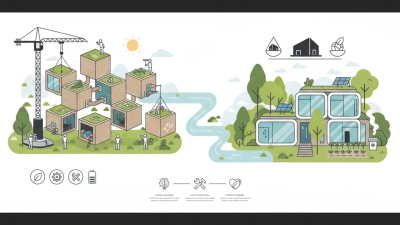
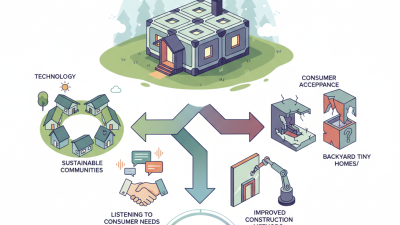
China’s eco homes sector is gaining attention as global buyers seek lower-carbon, faster, and more resource-efficient housing. The International Energy Agency reports that buildings consume about 30% of global final energy and produce roughly 26% of energy-related emissions. These figures make material efficiency, insulation, and renewable-energy integration commercial priorities, not decorative extras.
China offers a broad supplier base, including modular homes, timber structures, light-gauge steel systems, and prefabricated concrete units. The suppliers selected for this guide are evaluated through practical criteria. These include factory experience, export records, engineering capability, quality controls, and documented environmental performance. Certifications such as ISO 14001, product testing, and Environmental Product Declarations can strengthen buyer confidence. However, certification alone proves little without traceable data and independent verification. Details matter. A roof panel’s insulation value, a window’s thermal rating, and a supplier’s replacement policy can affect long-term costs.
The GlobalABC 2023 Global Status Report for Buildings and Construction highlights the sector’s continuing energy and emissions challenge. This context supports stronger demand for efficient eco homes, but sustainability claims should remain cautious. Some suppliers publish limited lifecycle information. Transport distance, local building codes, maintenance access, and end-of-life recycling can change the real environmental result. No ranking is perfect. This “top 10” overview should therefore be read as a practical starting point, not a final purchasing decision. Global buyers should request project references, factory audits, full specifications, and compliance documents before signing contracts. A visually impressive model home is not enough. Reliable performance begins with evidence.
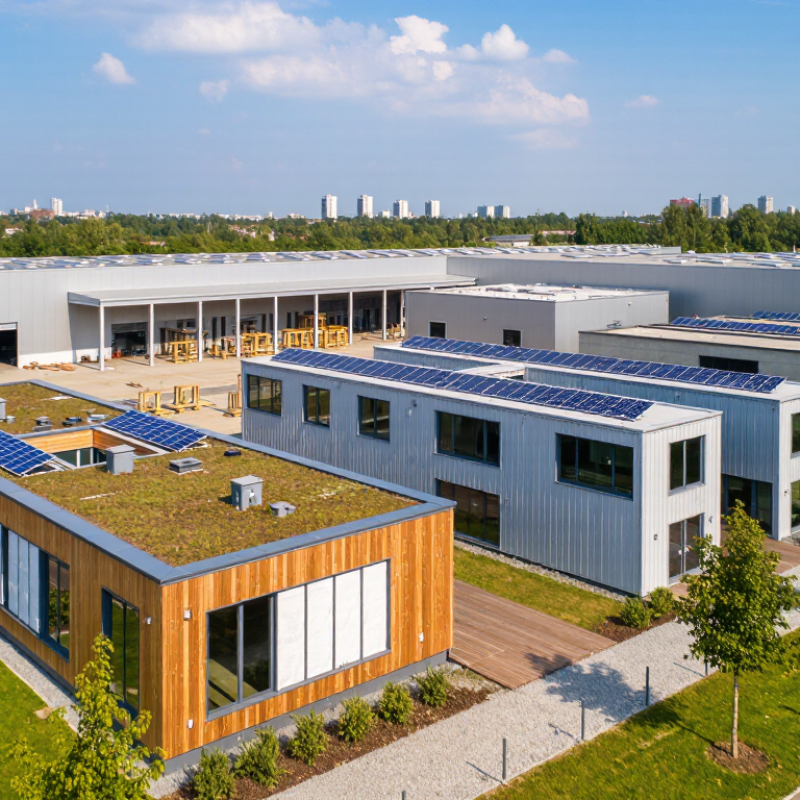
A credible eco home supplier in China is defined by measurable performance, not green language. The UNEP Global Status Report for Buildings and Construction 2023 found that buildings used 34% of global energy and produced 37% of energy-related and process emissions in 2022. Suppliers should therefore provide verified data on insulation, airtightness, cooling loads, and embodied carbon.
Look for life-cycle assessments covering materials, factory production, transport, installation, and replacement. Environmental Product Declarations aligned with ISO 14025 offer stronger evidence than attractive brochures.
Factory audits should examine timber sources, recycled content, water use, waste records, and worker safety. Test reports should identify standards, laboratories, dates, and product batches. Traceability matters.
Details reveal experience. Ask how a supplier protects wall panels from rain during loading. Ask who repairs failed seals after installation. A serious technical team can explain thermal bridges, vapor control, and local climate adaptation without hiding behind certificates.
The International Energy Agency reports that building energy codes and efficiency improvements remain essential for reducing sector emissions. Yet some suppliers still label ordinary modular units as “eco” products.
Perfect claims deserve suspicion. Data can also be incomplete, especially for transport and maintenance. Buyers should record these gaps, request corrections, and compare suppliers using the same functional unit. A cheaper quotation may conceal higher operating costs, frequent replacements, or difficult recycling.
Selecting China’s top eco home suppliers requires more than checking product photos or factory size. The International Energy Agency reports that buildings use about 30% of global final energy and create nearly 26% of energy-related emissions. Therefore, our selection focuses on measurable environmental performance. Suppliers should provide material specifications, energy data, waste records, and documented quality controls. ISO 14001 certification is useful, but it cannot replace an independent factory audit.
Experience also matters. We examine completed export projects, climate suitability, installation guidance, and after-sales response. Products receive closer attention when they include recycled content, low-emission finishes, efficient insulation, or renewable-energy integration. The UNEP Global Status Report for Buildings and Construction highlights the sector’s continuing pressure to reduce emissions and resource use. This makes lifecycle evidence more valuable than attractive marketing language. Still, supplier data may be incomplete. That limitation deserves honest review.
Tips: Request recent test reports, environmental product declarations, and batch-level material records. Confirm whether certificates match the exact model, not just the factory. Ask for a sample wall section before placing a large order. Check packaging, replacement parts, and local building-code support. A supplier that answers difficult questions clearly is often more reliable than one offering the lowest price.
China’s leading eco home suppliers serve different project needs. A bamboo furniture specialist offers laminated panels, low-formaldehyde finishes, and moisture testing for humid rooms. A modular housing producer focuses on factory-built walls, insulated roofs, and faster site installation. Its factory records deserve close review. A recycled-material workshop turns plastic and textile waste into durable storage, decking, and decorative panels.
A solar-integrated home supplier designs roof systems with energy monitoring and documented electrical testing. A low-carbon window manufacturer provides insulated glass, thermal-break frames, and measured air-tightness data. A natural-fiber insulation supplier uses hemp, cellulose, or mineral wool for wall and attic applications. Buyers should request fire, moisture, and mold reports before approval. A water-saving bathroom producer develops dual-flush toilets, efficient taps, and repairable fittings. Small details matter here.
A certified timber supplier supports flooring, doors, and structural components with traceable sourcing documents. A smart-home manufacturer combines occupancy sensors, lighting controls, and energy dashboards, while protecting user data through clear privacy policies. An eco-paint producer offers water-based coatings with low emissions and practical coverage data. These profiles reflect different strengths, not identical performance. Independent laboratory checks, factory audits, sample orders, and warranty terms help test each claim. Some catalogs look greener than production reality. That gap can be costly. Buyers should compare energy use, packaging, replacement parts, labor practices, and export experience before signing contracts. Supplier interviews also reveal useful weaknesses, such as limited color ranges or delayed custom tooling. Those imperfections are not automatic disqualifiers. They show where careful planning is needed.
China Top 10 Eco Homes Suppliers for Global Buyers
Key Products, Technologies, and Sustainability Features
China’s leading eco-home suppliers now offer modular villas, prefabricated timber houses, light-gauge steel units, and insulated sandwich panels. Global buyers should request verified product data, not attractive renderings. The GlobalABC and UNEP 2023 report states that buildings and construction produced 37% of global operational energy and process-related emissions. This makes insulation, airtightness, and efficient heating critical purchasing criteria.
Many suppliers integrate rooftop photovoltaics, air-source heat pumps, LED systems, smart energy controls, and rainwater collection. Some factories also use low-carbon concrete, recycled steel, FSC-certified timber, and factory-controlled cutting processes. Buyers should examine thermal-bridge details, fire ratings, moisture protection, and replacement access. The International Energy Agency reports that buildings consume about 30% of global energy. Therefore, a well-designed envelope may reduce daily energy demand more reliably than decorative green features.
Factory production can shorten installation time and reduce material waste. However, transport emissions may weaken that advantage for distant projects. A supplier’s environmental claim should include an Environmental Product Declaration, life-cycle assessment, and clear energy-performance testing. Certification alone is not enough. I would also inspect sample wall sections, sealant joints, and drainage details before signing. Small defects become expensive in humid climates. The evidence is useful, but rarely perfect.
| Rank | Supplier Profile | Typical Product Focus | Primary Construction System | Key Eco Technologies | Sustainability Features | Typical Certification or Compliance Options | Best-Fit Applications |
|---|---|---|---|---|---|---|---|
| 1 | Coastal Modular Housing Supplier | Flat-pack homes, modular villas, temporary accommodation units | Light-gauge steel or galvanized steel framing | Factory prefabrication, insulated wall panels, thermal-bridge reduction, low-energy lighting | Reduced construction waste, recyclable steel, demountable components, water-saving fixtures | Structural calculations, fire-rating documentation, energy-performance testing, export building-code adaptation | Remote workforce housing, resorts, emergency housing, residential developments |
| 2 | Engineered Timber Home Supplier | Wooden villas, prefabricated cabins, low-rise residential buildings | Timber-frame construction and engineered wood panels | CNC cutting, airtight envelope detailing, cellulose or mineral-wool insulation, passive-solar orientation | Renewable timber sourcing, bio-based finishes, low embodied carbon, repairable interior assemblies | Chain-of-custody timber documentation, moisture control, fire and wind-load compliance | Eco resorts, mountain cabins, holiday homes, small residential communities |
| 3 | Container Conversion Supplier | Reused shipping-container homes, offices, studios, retail units | Repurposed steel shipping-container modules | High-performance insulation, heat-reflective roofing, modular electrical and plumbing systems | Reuse of existing steel boxes, reduced on-site work, modular relocation, compact floor plans | Structural modification review, electrical safety testing, fire-safety materials, local planning compliance | Backyard studios, classrooms, site offices, hospitality units, affordable housing |
| 4 | Panelized SIP Home Supplier | Structural insulated panel homes, garden houses, compact villas | SIPs with oriented strand board facings and insulated cores | Factory-cut panels, continuous insulation, airtight joints, energy-efficient HVAC integration | Lower heating and cooling demand, fast installation, optimized material usage, reduced site waste | Thermal, structural and fire-performance testing; project-specific code certification | Cold-climate housing, passive-house-inspired projects, extensions, remote construction sites |
| 5 | Precast Concrete Eco-Home Supplier | Precast concrete houses, duplexes, apartments, disaster-resistant buildings | Factory-made reinforced concrete panels and modules | High-precision molds, insulated sandwich panels, low-water mix control, heat-pump readiness | Long service life, thermal mass, reduced formwork waste, recycled aggregate options where available | Concrete strength reports, seismic and wind-load design, fire-resistance documentation | Urban housing, coastal buildings, high-wind areas, multi-unit developments |
| 6 | Light-Gauge Steel Villa Supplier | Modern villas, multi-story prefab houses, custom residential shells | Cold-formed galvanized steel framing | Computer-aided design, automated roll forming, ventilated façades, high-efficiency insulation systems | High recyclability of steel, precise material nesting, low construction moisture, durable envelope | Galvanizing specifications, structural engineering, fire and thermal performance reports | Suburban homes, coastal villas, modular apartment projects, export housing programs |
| 7 | Renewable-Energy Integrated Home Supplier | Solar-ready modular homes, net-zero-oriented villas, energy retrofit packages | Modular steel, timber, or hybrid construction | Rooftop photovoltaic systems, battery storage, smart energy monitoring, air-source heat pumps | On-site renewable generation, demand management, LED lighting, efficient appliances, rainwater options | Electrical conformity documentation, PV system specifications, energy-modeling reports | Off-grid homes, eco resorts, rural housing, energy-conscious residential projects |
| 8 | Tiny and Micro Home Supplier | Tiny houses, movable cabins, compact studios, mobile accommodation | Trailer-based, timber-frame, or light-steel modular construction | Space-efficient layouts, compact heat-pump systems, low-flow plumbing, LED lighting | Low material consumption, small operating footprint, transportability, replaceable fittings | Trailer or transport compliance where applicable, electrical testing, local occupancy requirements | Glamping, guest accommodation, backyard offices, student housing, remote tourism |
| 9 | Bamboo and Bio-Based Building Supplier | Bamboo villas, pavilions, resort cabins, natural-material interiors | Treated bamboo structures with timber or steel connections | Engineered bamboo components, passive ventilation, natural shading, low-VOC coatings | Rapidly renewable material options, biobased finishes, reduced concrete use, locally adaptable designs | Bamboo treatment records, durability testing, structural design review, fire-safety assessment | Tropical resorts, leisure buildings, pavilions, low-rise sustainable developments |
| 10 | Integrated Green-Building Supplier | Turnkey eco homes, prefabricated villas, energy-efficient residential complexes | Hybrid steel, concrete, timber, and panelized systems | Building information modeling, passive-design analysis, heat recovery ventilation, smart-home controls | Whole-life energy planning, construction-waste sorting, efficient water systems, maintenance-focused design | Project-specific green-building assessments, product test reports, quality-management documentation | Turnkey developments, institutional housing, premium villas, international residential projects |
China Top 10 Eco Homes Suppliers for Global Buyers
How Global Buyers Can Compare and Choose a Supplier
Comparing eco-home suppliers requires more than checking catalog prices. Request product specifications, material sources, energy data, and recent project references. A reliable supplier should explain insulation thickness, window performance, structural grades, and expected service life. Ask for recognized test reports and factory audit records. Documents should match the actual production site.
Review the supplier’s engineering process carefully. Can its team adapt drawings to local building codes? Does it provide structural calculations, installation manuals, and replacement-part support? Compare quotations line by line, including packaging, inland transport, customs documents, and on-site assembly. A cheap offer may exclude essential work. That mistake becomes expensive.
See the factory, if possible.
During a virtual inspection, ask to see cutting, welding, insulation, and final quality checks. Request timestamped videos and speak with a project manager, not only a salesperson. Payment schedules should connect with measurable milestones, such as completed frames or passed inspections. Check warranty wording for moisture, corrosion, and installation defects. Some suppliers respond quickly before payment, then slowly afterward. This risk deserves attention. No checklist is perfect. Even strong certifications cannot replace careful sampling, independent inspection, and a small trial order. Supplier selection improves when buyers record every promise and test each one against delivered materials.
How Global Buyers Can Compare and Choose a Supplier
This buyer-side scoring model uses a 100-point weighting system. Energy performance, product quality, compliance documentation, and total delivered cost receive the highest priority, while customization, lead time, after-sales support, and environmental materials help distinguish suppliers with similar technical capabilities.