...

What Is a Futuristic Home and How Much Does It Cost?

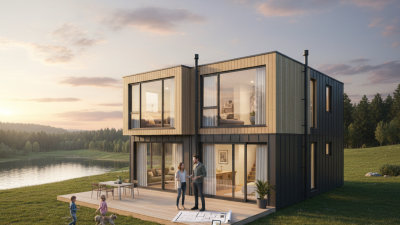
A futuristic home is not simply a glass cube filled with expensive gadgets. It is a responsive living space that uses technology, thoughtful design, and efficient materials to improve everyday life. Smart lighting may follow daylight. Windows might tint themselves during intense afternoon heat. Sensors can monitor air quality, water use, and energy demand.

The label is blurry. A sleek appearance does not guarantee a truly advanced home. Futuristic homes should also feel practical, comfortable, and maintainable. Architect and sustainability pioneer William McDonough said, “Design is the first signal of human intention.” His idea matters here because visible innovation means little without responsible planning. A beautiful automated kitchen still fails if replacement parts are unavailable or software becomes outdated.

Cost varies sharply. A modest technology-focused renovation may begin near $50,000, while a custom high-performance home can exceed $1 million. Land, structure, local labor, renewable systems, and imported materials often create the largest differences. Solar panels, home batteries, geothermal heating, robotic shading, and advanced insulation can raise the initial budget. They may reduce operating costs later, but savings are never guaranteed.

Real homes are messier than showroom images. Devices disconnect. Batteries age. Owners change their habits. That deserves attention. The smartest design may be the one that still works manually during a power cut. This guide examines what futuristic homes actually include, how much they cost, and which features provide meaningful value rather than fashionable complexity.

What Is a Futuristic Home and How Much Does It Cost?

Defining Futuristic Homes: Automation, Resilience, and Human-Centered Design

What Is a Futuristic Home and How Much Does It Cost?

A futuristic home is not defined by glowing walls or unusual furniture. It combines automation, resilience, and human-centered design in practical ways. Lights can adjust to daylight, while heating responds to room occupancy. Sensors may detect water leaks before serious damage occurs. The goal is calm control, not constant technological excitement.

Resilience gives the concept greater value. Well-insulated walls, shaded windows, backup power, rainwater storage, and fire-resistant materials can reduce household risks. A reliable home should also work during internet or power failures. Manual switches still matter. Quiet matters. A beautiful interface can become frustrating when residents cannot understand it. Design should support children, older adults, guests, and people with limited mobility. That standard is often missed.

Costs vary sharply by location, structure, and energy requirements. A technology-focused renovation may add roughly 10% to 25% to a conventional project. A fully customized new home can exceed $300 per square foot in many markets. Annual maintenance may include battery replacement, software updates, sensor testing, and specialist inspections. These expenses deserve attention before construction begins. No system is flawless. Even experienced designers can overestimate convenience and underestimate repair complexity. A careful plan uses open standards, clear documentation, and simple fallback controls. Not perfectly. But responsibly.

Mapping the Technology Stack: IoT, AI, Robotics, and Renewable Energy

What Is a Futuristic Home and How Much Does It Cost?

A futuristic home connects IoT sensors, artificial intelligence, robotics, and renewable energy. Sensors monitor temperature, air quality, lighting, water use, and security. The house learns. AI can adjust rooms automatically, but human control remains essential. A mobile robot might vacuum floors, carry small items, or inspect difficult spaces. Solar panels, battery storage, heat pumps, and smart windows can reduce grid dependence. However, performance depends on climate, insulation, maintenance, and household habits.

Costs vary widely by location and construction quality. A technology upgrade may begin near $25,000, while a fully integrated new home can exceed $500,000. Renewable systems often require major upfront spending. Robotics and custom automation add further costs. Software subscriptions, repairs, network upgrades, and battery replacement are easy to underestimate. That is the uncomfortable part. More technology does not always create more comfort.

Tips: Build the infrastructure before buying gadgets. Install reliable wiring, strong network coverage, and clear access controls. Ask licensed professionals to assess electrical loads, fire safety, structural limits, and local regulations. Choose systems that work manually during outages. Protect household data with separate user accounts and regular updates. Test one room first. A small pilot can reveal confusing controls, false alerts, or wasted energy before the entire home depends on them.

Measuring Efficiency: DOE Says Heat Pumps Deliver 2–4× More Heat Than Electricity Used

A futuristic home is less about glowing walls and more about quiet efficiency. Its heat pump moves heat instead of creating it directly. The U.S. Department of Energy explains that heat pumps can deliver two to four units of heat for each unit of electricity consumed. That ratio changes the household energy equation.

Consider a 1,500-square-foot home with sealed windows and balanced insulation. On a cold morning, the system may draw electricity while extracting usable heat from outdoor air. The floor feels warm, but the equipment remains relatively quiet. The International Energy Agency reported that global heat pump sales grew by 11% in 2022, showing stronger demand for efficient heating. However, performance depends on climate, installation quality, and the home’s insulation.

Costs remain uneven. The U.S. Department of Energy reports that total heat pump installation prices can vary widely with equipment size, electrical upgrades, ductwork, and regional labor. A realistic project budget may reach several thousand dollars before incentives. That is not futuristic pricing. It is a serious renovation expense. Yet lower heating demand can reduce operating costs over time, especially where electricity is cleaner or cheaper than delivered fuels.

Small details matter. Poor air sealing can erase much of the expected benefit. Oversized equipment may cycle too often. The 2–4× figure is useful, but it is not a guarantee. Homeowners should request seasonal efficiency data, a room-by-room load calculation, and measured airflow after installation. Efficiency looks impressive on paper. Field results can be humbler.

What Is a Futuristic Home and How Much Does It Cost?

A key measure of an energy-efficient home is heating performance. The U.S. Department of Energy states that heat pumps can deliver approximately 2–4 units of heat for every unit of electricity they use, while electric resistance heating delivers about 1 unit of heat per unit of electricity.

How to read the chart: A higher coefficient of performance (COP) means more heat is produced from the same amount of electricity. Heat pump performance varies with system type, outdoor temperature, installation, and operating conditions.

Estimating Construction Cost: NAHB Reported $162.71 per Square Foot in 2024

A futuristic home is not defined by an unusual shape alone. It may include passive solar design, automated shading, energy monitoring, heat pumps, resilient materials, and flexible rooms. These features can improve comfort, but they also require careful planning and skilled installation.

The NAHB reported an average construction cost of $162.71 per square foot in 2024. For a 2,000-square-foot house, that equals about $325,420 before many additional expenses. The figure is a baseline. It generally reflects construction costs, not land, financing, design fees, permits, utility connections, or landscaping. A futuristic project may also need custom engineering, advanced wiring, backup power, and specialized climate-control equipment. Each addition can raise the final price.

The figure is a baseline. It generally reflects construction costs, not land, financing, design fees, permits, utility connections, or landscaping.

Location changes the calculation significantly. Labor availability, soil conditions, weather exposure, and local building rules can shift costs well above the national figure. In practice, I would treat the NAHB number as an early planning tool, not a guaranteed bid. A realistic budget should include a contingency reserve, often around 10% to 20%, although complex designs may require more. That is the uncomfortable part. Smart technology can become outdated, and repairs may need uncommon expertise. A smaller, well-insulated home may deliver more practical value than a larger house filled with impressive but unnecessary systems.

Calculating Total Cost of Ownership: Equipment, Installation, Energy, and Upkeep

A futuristic home combines automated lighting, climate control, security sensors, energy monitoring, and adaptable living spaces. Its real price extends beyond equipment. A realistic ownership plan must include installation, electricity, repairs, software updates, and eventual replacement.

Equipment may cost $15,000 to $80,000, depending on the home’s size and automation level. Sensors, control panels, batteries, efficient windows, and backup systems create different cost layers. Installation can add 20% to 40%, especially when walls require rewiring or stronger network connections. Skilled inspection matters here. Poor installation can cause unreliable readings, unsafe electrical loads, and expensive corrections.

Energy costs may fall through insulation, solar generation, and automatic temperature adjustments. However, connected equipment still consumes electricity, and batteries lose capacity over time. Annual upkeep commonly includes filter changes, calibration, cleaning, cybersecurity checks, and technician visits. Set aside roughly 1% to 3% of the home’s technology value each year for maintenance. That estimate varies widely. A humid coastal home may need more frequent inspections than a dry inland property. Small failures spread. One faulty sensor can trigger unnecessary heating, security alerts, or water use. I would also budget for replacements after five to twelve years, although some components may last longer. A detailed ownership worksheet should separate predictable bills from uncertain repairs, because optimistic estimates often hide the most expensive part: labor.

What Is a Futuristic Home and How Much Does It Cost? — Calculating Total Cost of Ownership Illustrative 10-year cost model for a 2,000-square-foot, all-electric home in U.S. dollars
Cost Category Included Components Low Estimate Typical Estimate High Estimate Cost Timing
Initial Equipment and Installation Costs
High-performance building envelope Insulated walls and roof, high-efficiency windows, airtightness improvements, and exterior shading $45,000 $65,000 $95,000 Upfront
Electric heating and cooling Cold-climate heat pump, smart thermostat, ductwork modifications, and zoning controls $17,000 $24,000 $35,000 Upfront
Solar generation and battery storage Rooftop photovoltaic system, inverter, monitoring equipment, and approximately 10–20 kWh of storage $33,000 $45,000 $60,000 Upfront
Home automation and monitoring Occupancy sensors, lighting controls, motorized shades, energy monitoring, water-leak detection, and security sensors $7,000 $11,000 $17,000 Upfront
Water-efficiency systems Heat-pump water heater, hot-water recirculation, low-flow fixtures, and automatic shutoff controls $3,000 $5,000 $9,000 Upfront
Electric-vehicle charging Level 2 charger, dedicated circuit, load management, and basic conduit installation $2,000 $4,000 $7,000 Upfront
Initial equipment subtotal Major systems and technology before labor $70,000 $103,000 $146,000 Upfront
Installation, commissioning, and permits Specialist labor, electrical upgrades, programming, inspections, testing, and project commissioning $37,000 $49,000 $77,000 Upfront
Total initial investment Equipment plus installation and commissioning $107,000 $152,000 $223,000 Year 0
Recurring Ownership Costs
Net household energy Electricity purchased after on-site solar generation; assumes normal household consumption and excludes vehicle charging $1,200/year $1,800/year $3,000/year Annual
Maintenance and replacement reserve Routine servicing, filter replacement, software subscriptions, sensor replacement, battery reserve, and minor repairs $2,500/year $4,000/year $6,500/year Annual
Ten-year energy cost Annual net energy cost multiplied by ten; excludes utility-rate inflation $12,000 $18,000 $30,000 Years 1–10
Ten-year maintenance cost Annual maintenance and replacement reserve multiplied by ten $25,000 $40,000 $65,000 Years 1–10
Estimated 10-year total cost of ownership Initial investment + ten-year energy + ten-year maintenance $144,000 $210,000 $318,000 10-year total
Planning assumptions: U.S. dollars, 2026 cost levels, a 2,000-square-foot detached home, moderate climate, all-electric operation, and no land, mortgage interest, taxes, insurance, major structural construction, incentives, or resale value. Actual costs vary by climate, local labor rates, electrical capacity, building condition, system size, and permitting requirements.
Seraphinite AcceleratorOptimized by Seraphinite Accelerator
Turns on site high speed to be attractive for people and search engines.