Top 10 Tiffin Lunch Box Types for Global Buyers
Global buyers are rethinking the humble Tiffin Lunch Box as food costs, commuting, and packaging concerns reshape daily meals. UNEP’s Food Waste Index Report 2024 estimates that 1.05 billion tonnes of food were wasted in 2022. That figure strengthens the case for durable, portion-friendly containers, although one lunch box cannot solve waste alone. The World Bank’s What a Waste 2.0 report projects municipal solid waste could reach 3.40 billion tonnes annually by 2050. Reusable design matters. Yet material choice, cleaning habits, and product lifespan matter more than marketing language.
This guide examines ten Tiffin Lunch Box types for distributors, retailers, corporate buyers, and households across different markets. The selection includes stainless steel, food-grade plastic, glass, insulated, stackable, bento-style, leakproof, microwave-compatible, and compartmentalized designs. Each type serves a different routine. A stainless-steel model suits hot curries and repeated transport. A glass option helps users inspect portions clearly, but it adds weight and breakage risk. An insulated model protects temperature during long commutes, although performance depends on preheating and seal quality.
Buyers should verify food-contact compliance for their target market. Relevant references may include U.S. FDA requirements and European Regulation (EC) No. 1935/2004. Suppliers should also request migration tests, material declarations, and dishwasher-cycle evidence. Details decide. Capacity labels can be inconsistent across regions, so practical testing remains essential. Fit comes first. No ranking can serve every buyer perfectly; this comparison favors transparent criteria while acknowledging that price, climate, logistics, and user habits can change the result.
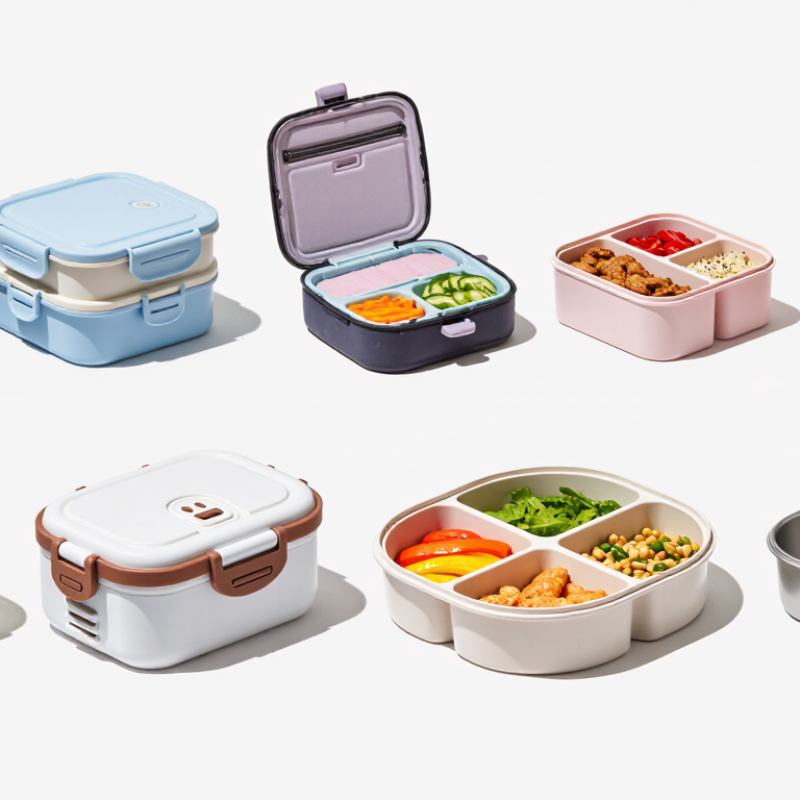
Tiffin Lunch Boxes: Definition, Structure, and Core Functions
A tiffin lunch box is a reusable food container built from separate compartments. Its traditional form uses stacked bowls, a locking lid, and a carrying handle. Modern versions may use stainless steel, food-grade plastic, glass, or mixed materials. The term is not perfectly standardized. Buyers should verify dimensions and construction details.
The structure usually includes two to four containers, sealing rings, clips, and an outer carrier. Some models separate dry foods from sauces. Others use leak-resistant lids for soups and curries. A reliable design should resist tipping, staining, and repeated washing. It should also open easily with wet hands. Small details matter.
Grand View Research estimated the global food packaging market at USD 562.3 billion in 2023, showing strong demand for practical food storage systems. Reusable lunch boxes support this shift, but environmental claims need careful review. Material durability, repairability, shipping weight, and end-of-life options all affect performance. A lightweight box may reduce transport emissions, yet fail sooner. That trade-off deserves attention. For global buyers, core functions include portion control, food separation, spill prevention, temperature retention, and convenient cleaning. Testing should cover seal pressure, hinge strength, odor retention, and repeated thermal cycles. Not every “leakproof” claim performs equally in real kitchens.
Top 10 Tiffin Lunch Box Types for Global Buyers
Tiffin lunch boxes are reusable food containers made from stacked or compartmentalized vessels for carrying separate meals. Their core functions include portion separation, food storage, portability, leak control, reheating, and temperature retention.
The chart compares representative nominal capacities commonly specified for these product configurations. Values are approximate category-level specifications rather than market-share figures; actual capacity varies by container dimensions and manufacturer design.
The Ten Main Tiffin Lunch Box Types by Design and Material
Top 10 Tiffin Lunch Box Types for Global Buyers
The Ten Main Tiffin Lunch Box Types by Design and Material
Global buyers usually compare tiffin lunch boxes by structure, material, and cleaning risk. In supplier evaluations, I inspect hinges, seals, welds, and food-contact surfaces. Small details often decide long-term performance.
Tiered stainless-steel tiffins suit hot rice, vegetables, and curry. Aluminum models are lighter, but they may dent during shipping. Plastic bento tiffins provide colorful compartments and lower unit costs. Glass containers resist odors and stains, although they need stronger protective packaging. Vacuum-insulated tiffins help maintain temperature during long commutes. That benefit depends on seal quality.
Collapsible silicone tiffins save storage space for travelers and online retailers. Bamboo-fiber composite boxes look natural, but buyers should verify food-contact documentation. Ceramic tiffins feel substantial and resist flavor transfer, yet their weight raises freight costs. Single-compartment leakproof boxes simplify packing and cleaning. Electric heated tiffins warm meals through a power connection, so plug compatibility and safety testing require careful review.
I once focused too heavily on appearance. A beautiful lid still failed after repeated washing. That experience changed my inspection process. Buyers should request drop tests, leakage tests, odor checks, and repeated opening trials. Measurements should include capacity, empty weight, thermal performance, and stacking tolerance. Materials must match the destination market’s food-contact requirements. Clear documentation builds trust, but practical sampling remains essential. Samples can reveal problems that specifications hide.
How Each Tiffin Type Serves Different Meal and Lifestyle Needs
For global buyers, the top ten tiffin types match different routines, appetites, and transport conditions. Single-tier boxes suit sandwiches and modest meals. Two-tier models separate rice from vegetables. Three-tier designs help families carry several dishes. Compartmentalized boxes control portions and keep sauces apart. Stainless-steel versions handle daily use and repeated washing. Lightweight plastic models suit commuters and school bags. Insulated tiffins protect temperature during longer journeys. Leak-resistant designs reduce spills beside laptops. Collapsible silicone boxes save space after lunch. Electric heated models serve workers without kitchen access.
The choice should follow the meal, not only the appearance. A deep box fits noodles, curry, or salad. A shallow tray works better for flatbread and fruit. Small containers help prevent oversized portions, although users may need extra refills. The UNEP Food Waste Index Report 2024 estimates that 1.05 billion tonnes of food were wasted in 2022. Portion control therefore has practical value. It is not a perfect solution.
Material selection also affects everyday confidence. Buyers should check gasket quality, closure strength, cleaning access, and food-contact information. An upside-down water test can reveal weak seals before purchase. According to UNEP’s 2023 Turning off the Tap report, systemic reuse and waste-reduction measures could cut global plastic pollution by 80% by 2040. Reusable tiffins support that direction, but only when people use them repeatedly. Heated models add convenience, yet charging needs and component cleaning can become annoying. Three-tier boxes offer flexibility, but their taller shape may tip inside crowded bags.

