What Is a Long Sleeve Wedding Gown?
A Long Sleeve Wedding Gown is a bridal dress with sleeves extending from the shoulder or upper arm toward the wrist. Its coverage can be delicate, dramatic, or completely practical. Some designs use sheer lace, while others feature satin, crepe, tulle, or embroidered illusion fabric. The sleeve length, neckline, and fabric weight strongly influence the gown’s overall character.
In my experience, long sleeves often create a graceful, structured appearance in photographs. They can also provide warmth during an autumn ceremony or a cool indoor celebration. A fitted lace sleeve may highlight the arms, while a softly gathered sleeve offers more movement. Small details matter. Covered buttons along the back can add texture. Narrow cuffs may make the dress feel tailored. A high neckline can appear refined, though it may feel restrictive for some brides.
This style is not automatically modest, traditional, or comfortable. That assumption deserves a second look. Heavy beading can make sleeves surprisingly warm. Tight wrist openings may become inconvenient during dining or dancing. I would always recommend sitting, lifting the arms, and walking several steps during a fitting. Those simple movements reveal problems that a mirror can hide.
A well-chosen Long Sleeve Wedding Gown should support the bride’s personal style, venue, season, and comfort. Professional alterations can adjust sleeve width, length, and closure details without changing the gown’s design. Reliable bridal guidance also considers fabric durability, lining quality, and movement. The right choice is not merely beautiful. It should feel wearable from the ceremony’s first quiet moment to the final photograph.
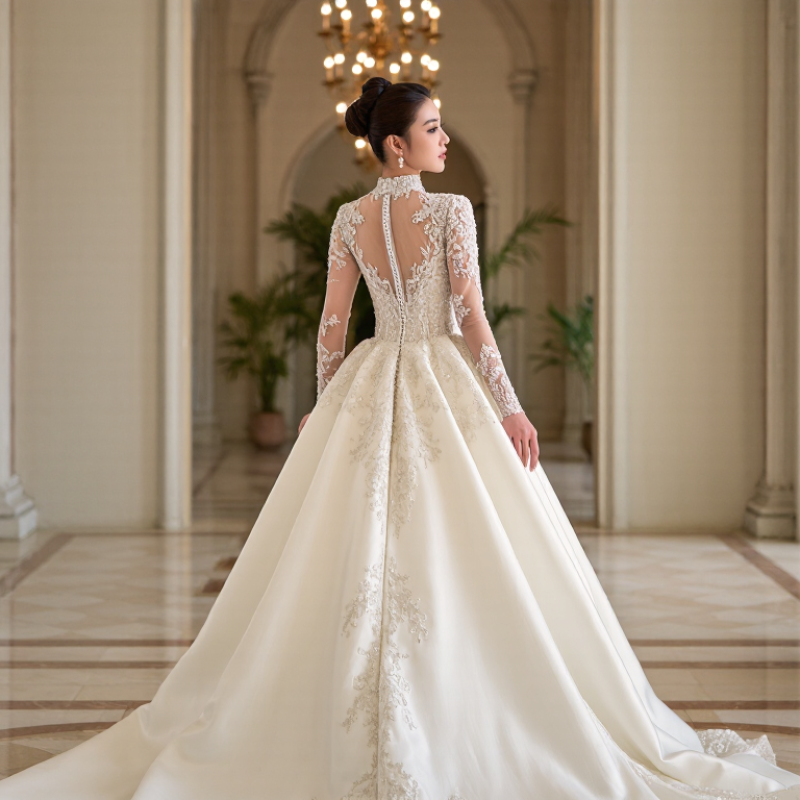
Definition and Key Features of a Long Sleeve Wedding Gown
What Is a Long Sleeve Wedding Gown?
Definition and Key Features of a Long Sleeve Wedding Gown
A long sleeve wedding gown covers the arm from shoulder to wrist, or near the wrist. Its sleeves may fit closely, drape softly, or flare at the cuff. Common fabrics include lace, satin, crepe, tulle, and lightweight illusion mesh. Lace sleeves create texture, while crepe offers a cleaner, modern line. Some gowns use detachable sleeves for changing ceremony and reception looks.
The main features are coverage, structure, and visual balance. A high neckline can create a formal appearance. A plunging neckline may make the sleeves feel lighter. Cuffs, covered buttons, and embroidered motifs add focused detail. In a fitting, check shoulder movement carefully. Raise both arms and sit down. A beautiful sleeve can still feel restrictive. That practical issue is sometimes overlooked.
The Knot’s 2023 Real Weddings Study reported an average wedding dress cost of about $2,000 in the United States.
Grand View Research valued the global bridal wear market at approximately $61.1 billion in 2022.
These figures suggest that buyers should compare fabric quality, construction, and alteration costs, not only appearance.
Tips: Choose breathable lining for warm venues. Ask whether the sleeve seam allows comfortable movement. Photograph the gown under indoor and outdoor lighting. A slightly imperfect fit is fixable, but persistent arm tension deserves reconsideration.
Common Sleeve Styles and Gown Silhouettes
A long sleeve wedding gown covers the arms from the shoulder to the wrist, though the design can feel light or dramatic. Sleeve construction strongly affects comfort, proportion, and the gown’s overall character. Fitted sleeves follow the arm closely and often use stretch lace or soft crepe. They create a refined line but may feel tight during dancing. Bishop sleeves gather at the wrist and add romantic volume. Bell sleeves widen toward the cuff, giving the dress gentle movement. Illusion sleeves use sheer fabric and lace details, offering coverage without a heavy appearance. Juliet sleeves add a rounded puff near the shoulder, then narrow along the forearm.
The sleeve should support the gown’s silhouette, not compete with it. An A-line skirt pairs easily with most sleeve styles because its gradual shape feels balanced. A ball gown benefits from structured sleeves, especially when the bodice has defined shoulders. Mermaid and fit-and-flare gowns often suit slim, fitted sleeves that echo their close shape. A sheath gown can look elegant with either clean crepe sleeves or delicate illusion lace. Small detail, big effect. During fittings, raise your arms, sit down, and hold a bouquet. Movement matters. A sleeve may look perfect in photographs but restrict the shoulders in real life. I have found that brides sometimes choose ornate lace too quickly. Consider the ceremony setting, season, and fabric weight before deciding. The most beautiful sleeve is not always the most practical one.
Fabrics, Necklines, and Decorative Details
A long sleeve wedding gown covers the arms from shoulder to wrist, or sometimes to the knuckles. Its character depends heavily on fabric. Satin creates a smooth, structured surface, while chiffon gives sleeves a softer, floating movement. Lace adds texture, but dense lace can feel warm under ceremony lighting. This matters during long celebrations. The Knot’s 2023 Real Weddings Study reported an average U.S. wedding dress spend of about $2,000. A carefully chosen fabric can protect that budget while preserving comfort. Grand View Research estimates the global bridal wear market will grow at approximately 4.5% annually from 2023 to 2030, reflecting continued demand for personalized designs.
Necklines change how long sleeves balance the body. A high neckline feels formal, while a sweetheart neckline softens the covered arms. Square necklines create clean geometry, especially with fitted sleeves. Decorative details should support the fabric, not compete with it. Small pearl buttons can trace the cuff. Embroidered vines may travel from the bodice toward the wrist. Beading near the shoulder adds light without making the gown feel heavy. I have seen delicate mesh sleeves photograph beautifully, yet require careful movement during fitting. That is an easy detail to overlook. A gown can look perfect on a hanger and feel restrictive after two hours. The best choice combines tested construction, breathable materials, and honest attention to movement.
Choosing a Long Sleeve Gown for the Wedding Setting
A long sleeve wedding gown covers the arms from the shoulder to the wrist. Its sleeves may be fitted, sheer, lace-trimmed, or softly gathered. The right choice depends on the wedding setting, not only the season. A cathedral ceremony may suit structured sleeves and a higher neckline. A garden celebration can feel lighter with transparent fabric and delicate cuffs. Beach weddings need breathable materials and secure construction. Keep movement in mind.
The Knot’s 2023 Real Weddings Study reported an average guest count of 115 and an average wedding cost of $35,000 in the United States. A larger guest list often means more walking, hugging, and dancing. The Knot’s 2022 study recorded 117 guests on average, showing that reception comfort remains important across recent reports. A dramatic sleeve may photograph beautifully, but it can become warm under reception lights.
In professional fittings, sleeve mobility deserves a practical test. Raise both arms, sit down, and hold a bouquet for several minutes. Check the underarm seam carefully. Satin can feel restrictive, while lightweight crepe usually follows movement better. For cool outdoor ceremonies, lined sleeves add warmth. For humid venues, unlined or breathable fabrics may be kinder to the skin. I would not trust a single mirror check. A gown can look perfect at noon and feel wrong after three hours. The setting decides the romance, but comfort decides how long you enjoy it.

