Why Choose a Theater Seating Manufacturer?
A theater is more than a room with a stage. It is a place where sightlines, acoustics, circulation, and seating work together. The U.S. National Endowment for the Arts and Bureau of Economic Analysis reported that arts and cultural production contributed 4.3% of U.S. GDP in 2021. That figure reflects a substantial sector, but it does not guarantee that every venue has the same needs. A school auditorium, a touring theater, and a neighborhood cinema face different capacity, maintenance, and accessibility demands.
That is why choosing a Theater Seating Manufacturer deserves careful attention. Theatre Communications Group’s Theatre Facts research tracks attendance, earned income, and operating costs across nonprofit theaters—useful context for owners planning long-lived facility investments. A manufacturer can help translate those constraints into practical choices: seat width, row spacing, durable upholstery, accessible positions, and replacement parts. Ask for product specifications, warranty terms, installation references, and clear maintenance guidance. See the details in person, if possible. A sample seat can reveal what a brochure misses: a hard edge, noisy hinge, or fabric that feels warm under stage lights. Still, no supplier can promise a perfect audience experience. Comfort is personal, and budgets are real. The better decision is a documented fit between the venue’s audience, room, and operating plan.
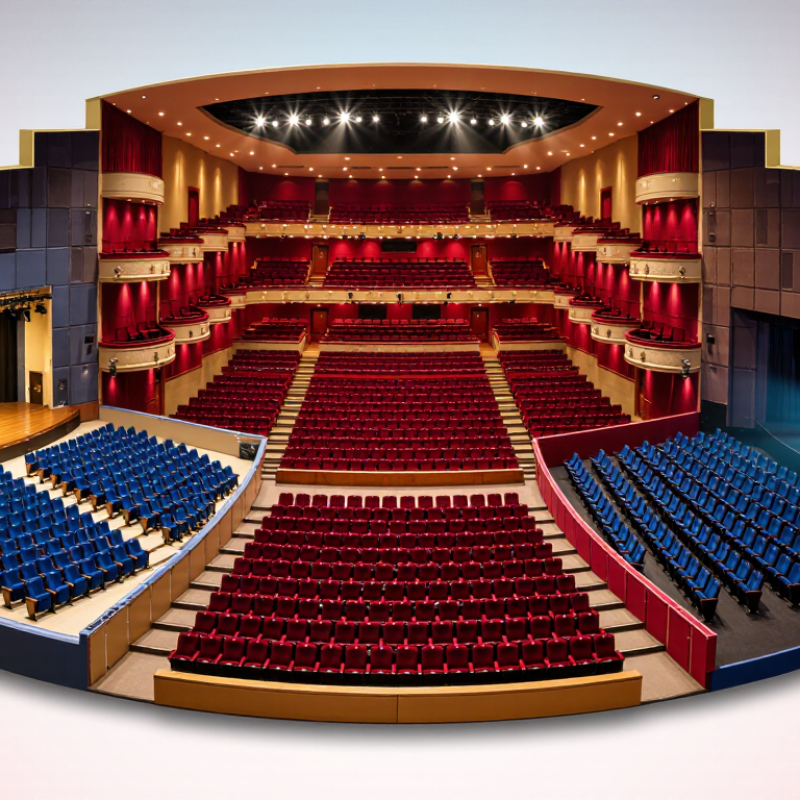
What a Theater Seating Manufacturer Provides
A theater seating manufacturer turns a room plan into seats people can use for hours. The Motion Picture Association’s 2023 THEME Report recorded $33.9 billion in global theatrical box office. That scale makes comfort and reliability practical concerns, not decorative extras. Small details matter.
A manufacturer can advise on seat width, row spacing, aisle layouts, upholstery, cupholders, and accessible configurations. It can also provide drawings that show sightlines and help teams coordinate seating with floors, walls, and exits. In a sample project, this might mean checking whether a recliner’s footrest clears the row behind it before the seats arrive. Fit matters. The manufacturer can share material specifications and testing information, but buyers should confirm that documents match the final model and intended use.
Support may continue through delivery, installation guidance, replacement parts, and maintenance instructions. That can help venue teams plan cleaning routines and manage worn upholstery or loose components. Yet a product sheet cannot reproduce the feel of a full room. It is worth testing a sample seat, checking its movement, and asking staff to assess cleaning access. Even careful planning misses something sometimes. A manufacturer’s real value shows in the details it helps resolve before opening day.
How Design Expertise Shapes Seating Performance
Why Choose a Theater Seating Manufacturer?
How Design Expertise Shapes Seating Performance
Good theater seating is engineered around real bodies, sightlines, and room geometry. A specialist can test seat pitch, back angle, and aisle clearance before production. Small changes matter: a seat that opens smoothly without striking a neighbor’s knees can make a crowded row feel less cramped. The World Health Organization’s 2022 Global Report on Health Equity for Persons with Disabilities estimates that 1.3 billion people, or 16% of the global population, experience significant disability. That makes accessible layouts and clear movement routes essential design considerations, not decorative extras.
A capable design team coordinates seating dimensions with riser heights, viewing angles, and venue capacity. The U.S. CDC reports that about one in four U.S. adults has a disability, underscoring the need for varied seating options and practical companion spaces. Material choice matters, too. Foam density, fabric durability, and hinge quality affect comfort and maintenance over years of use. Yet drawings can still miss a real-world snag. A full-scale mock-up may reveal a tight turn or an awkward armrest that a plan does not.
Tips: Test a sample row in the actual room. Check knee clearance, aisle access, sightlines, and how easily staff can clean beneath each seat. Ask for documented dimensions and durability test results.
Why Choose a Theater Seating Manufacturer? How Design Expertise Shapes Seating Performance
Accessible seating layouts depend on precise clearances. These ADA 2010 Standards dimensions provide useful reference points for planning theater spaces.
The ADA specifies a minimum clear floor space of 30 × 48 inches for wheelchair spaces (Section 305.3) and a 60-inch turning-space diameter where a turning space is required (Section 304.3.1). These are planning clearances, not theater-seat dimensions.
How Customization Meets Venue Requirements
Why Choose a Theater Seating Manufacturer?
How Customization Meets Venue Requirements
A theater seating manufacturer can translate drawings into seats that fit sightlines, circulation, and audience needs. Custom row curves help direct views toward the stage, while varied seat widths can accommodate different body sizes. Seat pitch, armrests, aisle-end details, and cup holders should be checked against the actual floor plan. The U.S. Access Board’s 2010 ADA Standards for Accessible Design specify a minimum clear floor space of 30 by 48 inches. Plan accessible spaces and companion seating early, and confirm applicable requirements with the project’s design team.
Customization also affects durability and maintenance. Removable seat pads can simplify repairs, while upholstery should suit cleaning routines and expected audience use. Request material samples, a full-size mock-up, and documentation on fire performance and warranties. A mock-up may reveal tight knee clearance or a noisy folding seat before installation. Still, added features can raise costs, and a polished sample cannot fully predict years of wear.
Tips: Share CAD plans, capacity, aisle widths, and access needs before requesting a quote. Test a seat in the venue, including its folding motion and sound. Use the 30-by-48-inch figure as a planning reference, then verify current local requirements with qualified professionals.
How Manufacturing Standards Ensure Safety and Durability
Choosing a theater seating manufacturer matters because safety is built into the frame, joints, upholstery, and installation details. EN 12727 sets strength and durability test methods for row seating. ASTM E1537 provides a method for testing upholstered furniture’s fire behavior. Ask for current test reports, material traceability, and clear installation instructions—not just a general claim of compliance.
Fire performance deserves attention. NFPA estimates that upholstered furniture was the first item ignited in about 7,400 U.S. home fires annually from 2015 to 2019. Those figures concern homes, not theaters, but they show why fabric and padding choices should not be treated as decoration alone. A paper pass is not the whole story. Repeated use, loose floor fixings, or a poorly fitted seat can still create problems.
Tips: Request test documentation for the exact seat configuration, including fabric and foam. Check anchors, welds, and moving parts during installation and routine inspections. Ask how defects are recorded and addressed. Even solid test results cannot predict every crowded-room impact, so practical inspection still matters.
How Installation and Support Affect Long-Term Value
A theater seat is not a stand-alone purchase; its long-term value depends on how well it is installed and supported. Correct row spacing, secure floor anchoring, and clear access to service points affect safety and daily use. A careful handover should also document seat locations, fixings, and replacement parts. Small details matter.
The U.S. Environmental Protection Agency’s 2018 Advancing Sustainable Materials Management report estimated that 10.1 million tons of furniture and furnishings went to landfill. Theater seating is only one part of that category, but the figure shows why repairability deserves attention. Replaceable upholstery, accessible fasteners, and a reliable parts supply can help venues avoid replacing entire rows for one damaged component. It is not always possible to repair every seat, and that should be planned for.
Installation quality shapes those repair costs. Poor alignment can leave seats scraping, uneven sightlines, or obstructed aisles; these problems may not appear during a quick handover. Ask the manufacturer to verify anchoring, inspect finished rows, and explain routine maintenance to staff. Keep the inspection record. A row can look perfect on opening night and still reveal issues after months of heavy use. Regular checks help catch loose fixings and worn upholstery early.

