Global buyers are rethinking how homes are designed, delivered, and built. The scale of the challenge is clear: the UN Environment Programme’s Global Status Report for Buildings and Construction 2024/2025 says buildings account for 32% of global energy use and 34% of energy-related carbon dioxide emissions. That makes material efficiency and operational performance important parts of any housing decision. Not just appearance.
living homes prefab can offer a practical alternative to conventional construction. Factory production allows components to be made while site preparation continues, potentially shortening schedules and improving consistency. McKinsey’s 2019 report, Modular construction: From projects to products, estimated that modular methods could accelerate project delivery by up to 50% and reduce costs by up to 20% in suitable cases. These are potential gains, not guarantees. Results depend on design, transport distance, local labor, climate, and the quality of installation.
For international buyers, the appeal is tangible: a compact home can arrive with major elements prepared, reducing some on-site work and uncertainty. Yet prefab is not automatically cheaper, greener, or easier to approve. Foundations, utility connections, shipping, and local building requirements still matter. The details can bite. Buyers should compare complete project costs, insulation specifications, warranties, and supplier experience—not just the quoted price. A factory-built home may suit a remote plot or a tight schedule, but every project deserves careful checking. The promise is real; so are the trade-offs.
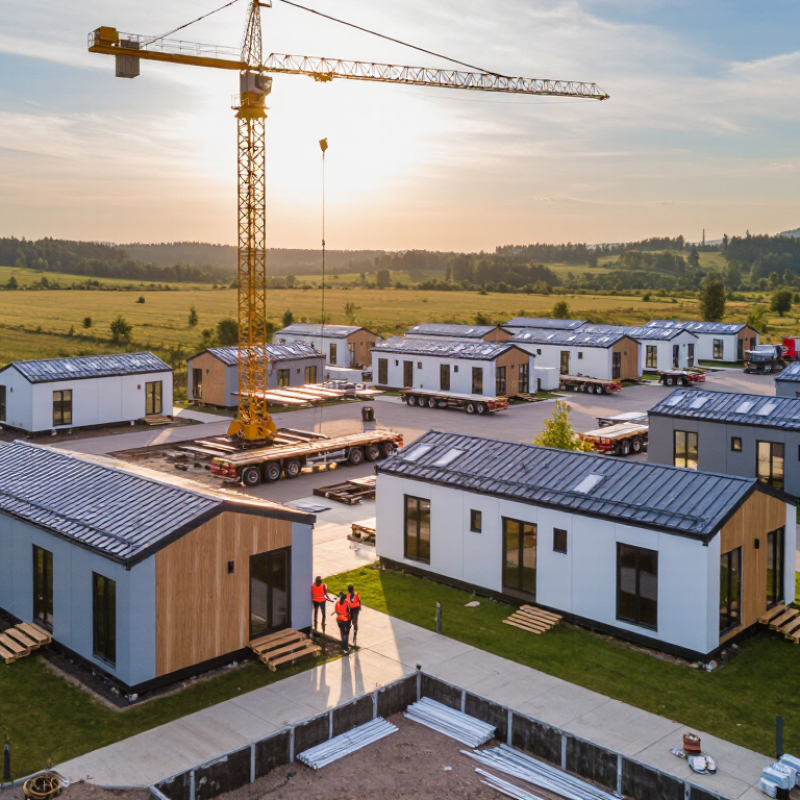
A prefab living home is built partly or largely in a factory, then transported to a site for assembly. This differs from a conventional home, where most construction happens outdoors. Factory production can protect materials from rain and make dimensions easier to check. A wall panel may arrive with insulation, wiring channels, and window openings already prepared. Less time on site. Yet transport access, foundations, and utility connections still need careful planning.
Common types include modular homes, assembled from room-sized sections, and panelized homes, shipped as walls, floors, or roof components. Some systems use structural frames with insulated panels; others use volumetric modules with finished interiors. The right choice depends on climate, site access, budget, and how much customization is needed. A narrow road can make large modules impractical. That detail is easy to overlook.
Standards matter as much as the construction method. Buyers should ask for documented structural calculations, fire and thermal performance data, and material specifications. These documents help designers assess a home against local building requirements; factory certification alone does not guarantee approval everywhere. Requirements vary by region, especially for wind, snow, seismic activity, and energy use. Ask who coordinates permits and inspections. Global applications range from rural family housing to worker accommodation and remote clinics, but shipping costs and local maintenance can change the economics. Prefabrication is not automatically cheaper. A realistic project review should include the site, delivery route, and long-term repair needs.
Prefab construction can shorten schedules by moving part of the work indoors. While crews prepare foundations, factory teams build wall panels, floor sections, or complete modules. McKinsey has reported that modular construction can reduce project timelines by 20–50%. That is a potential range, not a promise for every home. The result depends on design complexity, transport distance, site readiness, and local approvals.
A dry factory floor offers steadier conditions than an exposed building site. Workers can use repeatable jigs, inspect connections, and store materials away from rain. Meanwhile, fewer trades need to wait for one another on site. A crane may set finished sections in place within days.
Impressive, but not effortless.
Late design changes can disrupt production, and a delayed foundation can leave modules waiting. Buyers should confirm what the factory scope includes, how components will travel, and who coordinates installation. Those details often matter more than the headline schedule. Prefab homes can make delivery more predictable, though careful planning still does the heavy lifting.
Prefab living homes move much of the building process from an exposed site into a controlled factory. Workers can measure, cut, and assemble components beside clearly marked storage areas. This makes material use easier to monitor. That matters.
WRAP has reported that off-site construction can reduce construction waste by up to 90%, depending on the project and how waste is measured. The potential savings come from careful planning: digital designs help calculate material quantities, while repeatable cutting methods can use more of each sheet or length. Factory teams can also separate offcuts for reuse or recycling before they become mixed site waste. Less gets discarded.
The figure is a possible upper limit, not a promise for every home. Changes made late in design, damaged deliveries, or poor coordination can still create waste. A practical project should track materials from ordering through installation, including packaging and unused components. For global buyers, asking for a project-specific waste plan is more useful than relying on a headline percentage. Factory production can reduce waste, but it still needs thoughtful design and honest reporting.
WRAP reports that off-site construction can reduce construction waste by up to 90%.
Illustrative index: conventional construction is set to 100; a 90% reduction leaves an index of 10. The figure represents the maximum reported reduction, not a guaranteed result for every project. Source: WRAP.
Prefab living homes can make construction planning more predictable, but the factory price is only one part of the budget. International delivery adds moving pieces. A home may travel by truck, ship, then truck again. Shipping costs depend on its dimensions, route, season, and packing method. Port handling, inland trucking, and crane hire may appear as separate charges. Even a short final-mile trip can require special access or lifting equipment. Small details matter.
Import duties and taxes depend on the destination and how the home is classified. Rules and fees differ between countries, so buyers should confirm current requirements with a qualified customs professional before ordering. Site works can also change the total: foundations, drainage, utility connections, and ground preparation all affect the final cost. A sloped plot or distant service connection may need extra work. Costs rarely line up neatly.
Tips: Ask for a written quote that separates product, shipping, port, and installation costs. Check what delivery terms include, and leave room for local site expenses. Compare the assumed route and unloading method with your actual property. A budget can still miss something; revisit it as site details become clearer.
Imported prefab homes must meet the destination country’s building rules, not just factory specifications. Local authorities assess structural loads, fire safety, insulation, wiring, plumbing, and emergency exits. A coastal site changes the checklist: wind pressure, salt corrosion, and foundation anchoring matter. Not enough to show a certificate.
Certification is not universal. In the EU, CE marking applies to covered products; it does not approve an entire home or replace planning permission. Buyers should request test reports for the exact wall, roof, and window assemblies being shipped, then confirm local acceptance before ordering. The IEA’s 2023 Global Status Report for Buildings and Construction estimates buildings used 34% of global energy demand and produced 37% of energy- and process-related CO₂ emissions in 2022. That makes documented insulation and energy performance increasingly important. Paper compliance can still miss a site condition.
Tips: Ask a local building professional to review drawings before production. Match every report to the supplied model and materials. Check twice.