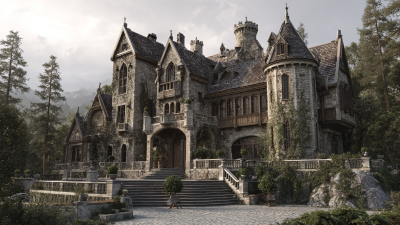
Buying castle homes in 2026 is no longer limited to aristocratic families or heritage investors. Global buyers can find fortified estates, restored manors, and medieval towers across Europe, the United Kingdom, and selected emerging markets. Each property tells a different story. Some offer grand stone halls, timber roofs, and gardens shaped by centuries of weather.
Yet romance cannot replace careful research. A castle may need a new roof, specialist masonry repairs, modern plumbing, or upgraded fire systems. Buyers should work with qualified local agents, conservation architects, independent surveyors, and cross-border tax advisers. Their experience can reveal costs hidden behind an impressive entrance gate. Official land records, planning rules, heritage restrictions, and ownership documents also require close review.
The buying process varies by country. Non-resident purchasers may face limits, taxes, currency risks, or additional reporting duties. Professional legal advice is essential before signing any reservation agreement or transferring funds. Financing can be difficult when lenders view historic buildings as unusual assets. Insurance may also cost more because of remote locations and protected structures.
The dream remains powerful. But the dream needs numbers. A sensible budget should include purchase costs, renovations, staffing, heating, security, and long-term maintenance. Some assumptions will be wrong. Even experienced buyers can underestimate winter repairs or local approval times. This guide explains how to evaluate castle homes with patience, evidence, and realistic expectations, helping international purchasers make informed decisions in 2026.

Buying a castle in 2026 begins with a clear purpose, not a romantic photograph.
Will it be your private residence, a family retreat, or a carefully managed hospitality property? Each goal changes the suitable location, renovation budget, staffing needs, and ownership structure.
Include preferred climate, travel time, privacy, guest capacity, and a realistic annual budget. A medieval tower may look magnificent, yet narrow stairs can limit daily comfort and future accessibility. Record what you will not compromise on. That list often matters more than the dream.
Global eligibility requires more than available funds.
Confirm passport-based entry rules, residency pathways, property ownership limits, and reporting duties in the target jurisdiction. These rules may differ for land, historic buildings, and rental activity. Use an independent property lawyer and a qualified tax adviser before signing anything.
Ask for verified title records, planning permissions, structural surveys, insurance requirements, and documented renovation estimates.
A local surveyor should inspect damp stone, drainage, roofs, wiring, and access roads.
Small defects become expensive quickly. Do not treat online estimates as evidence. Careful planning still has limits; hidden conservation costs can disrupt even a strong budget.
A substantial reserve and a slower decision may be wiser.
Castle buying in 2026 should begin with market research, not photographs. The Global Wealth Report 2024 recorded a 4.2% rise in global wealth during 2023. It also counted about 58 million dollar millionaires worldwide. More international buyers may enter this niche market, but demand remains highly local. Compare regions by tourism, transport, climate, and restoration rules. A castle near a functioning airport may outperform a remote estate with better views. Check winter access, water supply, local contractors, and broadband before arranging a viewing.
Property type matters equally. A fortified medieval structure can offer heritage value, but its walls may limit insulation and modern plumbing. A nineteenth-century manor may provide larger rooms and simpler conversion options. Mixed-use estates can include guest suites, farmland, or event spaces, yet each use needs separate financial testing. European buildings account for about 40% of energy consumption, according to the 2024 European Building Performance report. Thick stone does not automatically mean low energy costs. My first shortlist was too romantic. That was a costly research mistake. Request structural surveys, roof records, drainage tests, and twelve months of utility bills. Review ownership taxes, occupancy restrictions, insurance terms, and permitted renovations with qualified local advisers. Avoid relying on one inspection. Old buildings often hide ordinary problems behind impressive gates.
Buying a castle in 2026 begins with verifying who can legally own it. Ownership is not always simple. Some countries restrict land purchases by non-residents, companies, or foreign trusts. Rules may also differ between the building and surrounding farmland. Request an official land registry extract before signing anything. Check the seller’s name, boundaries, liens, access rights, and recorded easements. Ask an independent property lawyer to confirm translation accuracy. Online listings are useful, but they are not proof.
Heritage protection can control nearly every repair. A listed castle may require approval for new windows, roof tiles, heating systems, or security cameras. In one inspection, a cracked stone staircase looked minor but affected a protected interior. Contact the local heritage authority before planning renovations. Request written guidance, not verbal reassurance. Also check archaeological limits, public access duties, and restrictions on tree removal. A beautiful courtyard may have strict rules.
Property condition requires technical evidence. Hire a surveyor experienced with historic masonry, moisture, timber decay, and old electrical systems. Ask for roof photographs, drainage records, heating costs, and previous repair permits. Test the well and inspect septic systems where municipal services are absent. Obtain specialist estimates for urgent work and long-term conservation. The cheapest castle can become the most expensive mistake. I would leave a contingency budget untouched, even when the seller seems trustworthy. Conditions change. Your assumptions may be wrong.
A planning snapshot for global buyers before reviewing heritage restrictions and property condition.
“Open” means no general foreign-buyer ban. “Conditional” means permission, reciprocity, residency, or regional rules may apply. Switzerland is shown as restricted for many non-resident foreign buyers.
A listed castle may require conservation approval before changes to façades, roofs, interiors, landscaping, access, or services. Check the applicable national and local heritage register.
Before making an offer, commission independent surveys covering structure, roof, moisture, utilities, access, compliance, and estimated conservation costs.
The index uses a simple code: Open = 100, Conditional = 50, Restricted = 0. It is not legal advice; rules can vary by nationality, residence, property type, and region, and should be confirmed with the relevant authority and a local property lawyer.
How to Buy Castle Homes in 2026 for Global Buyers?
A castle budget must cover more than the purchase price. Begin with a separate cash reserve for legal checks, surveys, currency conversion, and closing taxes. OECD Revenue Statistics 2024 reports that recurrent property taxes averaged about 0.9% of GDP across OECD economies. Local rates can differ sharply. Ask for written estimates before signing anything.
Renovation costs need a realistic schedule. Roofs, drainage, stonework, heating, and electrical systems often compete for priority. UNEP’s 2024 Buildings Global Status Report estimates that buildings use about 32% of global energy and create roughly 34% of global emissions. Energy upgrades deserve a dedicated budget, especially in large, cold properties. Set aside 15% to 25% for unexpected repairs. It may still be insufficient. Old walls hide expensive problems.
Management is an ongoing operating cost, not an afterthought. Include security, groundskeeping, utilities, insurance, seasonal staff, and specialist maintenance. A practical starting estimate is 2% to 5% of the property’s value annually, adjusted after a local inspection. Tax treatment may involve transfer taxes, annual property charges, rental income, inheritance rules, and reporting obligations. The IMF’s 2024 Fiscal Monitor highlights continuing pressure on public finances, which can influence future tax policy. Get advice from a local tax professional and an independent building surveyor. Keep a reserve for empty months. Castles rarely behave like ordinary homes.
| Budget Dimension | Typical Benchmark for 2026 Planning | Illustrative Calculation on a €1,500,000 Purchase | When It Is Usually Paid | Practical Planning Notes |
|---|---|---|---|---|
| 1. Acquisition and Transaction Costs | ||||
| Property purchase price | €500,000–€10,000,000+ | €1,500,000 | Completion | Castle prices vary substantially according to location, land area, structural condition, legal status, access, and heritage restrictions. |
| Existing-property transfer taxes and registration charges | Approximately 4%–12% | €60,000–€180,000 | Completion or shortly after completion | Rates differ by country, region, property type, buyer status, and whether the property is new or previously owned. Confirm the current local schedule before signing. |
| Legal conveyancing and title review | 0.5%–2.0% of price | €7,500–€30,000 | Due diligence and completion | Budget for title verification, boundary review, easements, access rights, planning history, agricultural restrictions, and contract review. |
| Technical survey and specialist inspections | €3,000–€20,000+ | €8,000–€15,000 for a large historic property | Before exchange or signing | A castle may require separate structural, roof, timber, damp, drainage, electrical, heating, and environmental inspections. |
| Valuation, translation, notarisation, and document certification | €2,000–€12,000 | €5,000–€8,000 | During due diligence and financing | International buyers may need certified translations, powers of attorney, identity checks, and documents issued in more than one jurisdiction. |
| Currency conversion and international transfer allowance | 0.5%–3.0% of transferred funds | €7,500–€45,000 | When funds are transferred | Use a conservative allowance for exchange-rate movement, bank charges, transfer limits, and delays between deposit and completion. |
| 2. Renovation and Conservation Reserve | ||||
| Light refurbishment | €300–€700 per m² | €180,000–€420,000 for 600 m² | During works | Suitable mainly for decoration, limited repairs, flooring, painting, and upgrading selected fixtures where the building is already serviceable. |
| Standard full renovation | €800–€1,500 per m² | €480,000–€900,000 for 600 m² | Progress payments during construction | May include plumbing, electrical systems, insulation, bathrooms, kitchens, heating, windows, and internal finishes. |
| Complex historic or heritage renovation | €1,500–€3,000+ per m² | €900,000–€1,800,000+ for 600 m² | Progress payments over several years | Historic masonry, protected façades, specialist stonework, roof structures, listed interiors, and conservation approvals can materially increase costs. |
| Renovation contingency | 15%–30% of construction budget | €72,000–€270,000 on a €480,000–€900,000 renovation | Held throughout the project | Use the higher end where surveys are incomplete, the building is vacant, the structure is historic, or contractor access is difficult. |
| Architect, engineer, project management, and permits | 10%–20% of renovation works | €48,000–€180,000 on a €480,000–€900,000 renovation | Design stages and monthly progress payments | Allow for measured surveys, planning applications, structural design, tendering, site supervision, and compliance documentation. |
| 3. Taxes, Insurance, and Annual Ownership Costs | ||||
| Annual property and local taxes | €2,000–€30,000+ per year | €8,000–€20,000 per year | Annual or quarterly | Liability depends on assessed value, municipality, land size, use, exemptions, and whether the property is a primary residence, second home, or rental asset. |
| Building and liability insurance | 0.1%–0.4% of insured rebuilding value per year | €3,000–€15,000 per year | Annual premium | Insure against the cost of rebuilding rather than only the purchase price. Historic materials, vacant periods, events, and liability may require special terms. |
| Routine maintenance and repairs | 1%–2% of property value per year | €15,000–€30,000 per year | Throughout ownership | Large roofs, stone façades, drainage systems, grounds, gates, heating equipment, and outbuildings often require continuous maintenance. |
| Utilities and seasonal operating costs | €10,000–€50,000+ per year | €15,000–€35,000 per year | Monthly or quarterly | Costs are influenced by floor area, energy efficiency, climate, water systems, grounds, swimming pools, staff accommodation, and vacancy periods. |
| Landscape, grounds, security, and caretaker services | €15,000–€100,000+ per year | €25,000–€60,000 per year | Monthly or annual contracts | Extensive grounds, woodland, walls, gates, long driveways, alarm systems, and remote locations increase recurring operating costs. |
| 4. Management and Cross-Border Ownership | ||||
| Professional property management | 6%–12% of gross rental income | €12,000–€24,000 on €200,000 annual rental income | Monthly or per booking | Full-service management may include guest communication, check-in, contractor coordination, cleaning supervision, and emergency response. |
| Short-term rental operations and cleaning | 15%–30% of rental revenue, excluding taxes | €30,000–€60,000 on €200,000 annual rental income | Per booking or monthly | Consider local licensing, tourism taxes, occupancy limits, fire-safety rules, and restrictions on short-term accommodation. |
| Accounting, tax returns, and compliance administration | €2,000–€15,000 per year | €4,000–€10,000 per year | Annual or quarterly | Non-resident owners may need local tax filings, rental-income reporting, payroll administration, VAT or sales-tax support, and annual accounts. |
| Travel and owner-visit budget | €5,000–€30,000 per year | €10,000–€20,000 per year | As incurred | Include flights, local transport, accommodation, inspections, meetings with contractors, and emergency visits from the buyer’s home country. |
| 5. Recommended Cash Reserve | ||||
| Acquisition reserve excluding renovation | 8%–15% of purchase price | €120,000–€225,000 | Available before completion | This reserve generally covers taxes, legal work, surveys, currency movement, insurance setup, and immediate repairs. |
| Renovation and first-year operating reserve | 20%–35% of planned renovation budget plus 12 months of operating costs | €120,000–€315,000 plus annual running costs | Held before construction begins | Do not commit the entire budget to the purchase price. Historic properties frequently reveal hidden defects after walls, roofs, or services are opened. |
| Illustrative total cash requirement | Purchase price + 8%–15% acquisition costs + renovation + 15%–30% contingency | €2.2 million–€3.7 million for a €1.5 million castle with a 600 m² major renovation | Before purchase and throughout the project | The final amount depends mainly on structural condition, protected-building rules, renovation scope, financing, tax residence, and intended use. |
How to Buy Castle Homes in 2026 for Global Buyers?
Buying a castle requires more than enthusiasm and a picturesque viewing. Start with an independent surveyor familiar with heritage structures. Inspect roofs, drainage, stonework, wiring, wells, access roads, and hidden moisture. Request planning records, title documents, renovation permits, energy certificates, and insurance history. The 2024 International Valuation Standards stress that market value depends on evidence, assumptions, and property condition. A castle’s asking price is not proof of value.
Financing can be unusually difficult. Lenders may discount towers, farmland, protected interiors, or unapproved conversions. Prepare tax returns, asset statements, proof of funds, and a clear repayment plan. The 2025 Global Wealth Report recorded a 4.6% rise in global personal wealth during 2024, but liquidity remains uneven across countries. Obtain currency advice before signing. A small exchange-rate movement can alter the deposit substantially. Do not rely on a verbal lending promise.
Negotiate from documented defects, not emotion. Price the roof separately. Price the heating system too. The 2024 Global Property Guide cost comparisons indicate that buyer-side taxes and fees can commonly add 3% to 12%, depending on location and transaction structure. Confirm every charge with local counsel, including registration, inheritance exposure, land restrictions, and future resale rules. Use a contract subject to survey, financing, clean title, and permits. Closing should include a final inspection, verified bank instructions, insurance activation, and a written inventory. Even careful due diligence can miss one locked, damp room. Expect that possibility.