Why Are Modular Homes the Best Homes to Build?
Choosing the best homes to build now involves more than comparing floor plans and glossy photographs. Modular homes deserve serious attention because they are constructed in controlled indoor facilities, where weather causes fewer delays. Workers assemble walls, floors, wiring, and plumbing with repeatable methods. That process can improve consistency and reduce material waste. It also protects timber from prolonged rain during construction.
Tom Hardiman Jr., CEO of the Modular Building Institute, explains, “Modular construction is a construction process, not a building type.” His statement matters because modular homes can use many designs, finishes, and energy-saving systems. A homeowner may select an open kitchen, wider windows, or a compact accessible bathroom. Factory precision can also support tighter insulation and more predictable project timelines. Still, modular does not automatically mean cheap, perfect, or suitable for every site. Transportation costs, foundation work, local approvals, and limited customization can change the final budget. The promise needs testing.
A useful comparison should examine the complete building journey. Consider the factory schedule, delivery route, soil conditions, installation crew, and long-term maintenance. A home that arrives quickly may still require careful site preparation. That detail is easy to overlook. For many buyers, modular construction offers a practical balance between speed, quality control, and design freedom. It may not be the ultimate answer, but it is one of the most efficient homes to build when planning is honest, detailed, and evidence-based.
What Defines a Modular Home Under IRC Codes and Factory Standards?
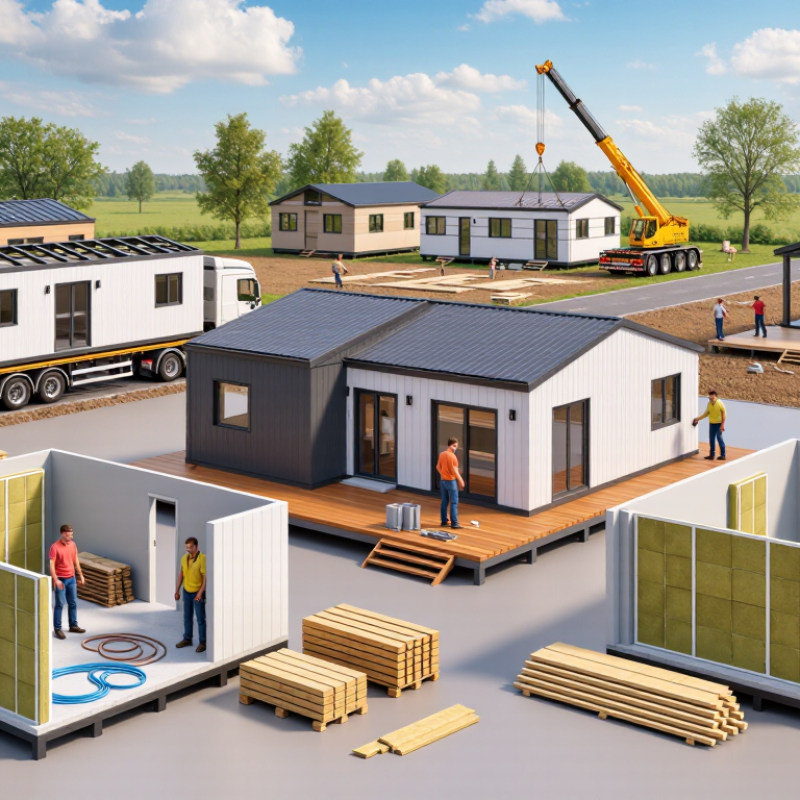
A modular home is defined by its compliance pathway, not merely by factory construction. Under the International Residential Code, modular sections are generally built to the locally adopted IRC requirements. They are then transported and installed on a permanent foundation. Local officials still review zoning, site access, utilities, wind loads, snow loads, and seismic conditions. A factory is not a code exemption. Important distinction. Modular housing also differs from HUD-code manufactured housing, which follows separate federal standards.
Inside the factory, approved drawings guide framing, wiring, plumbing, insulation, and moisture control. Quality checks occur before the modules leave the production line. State programs or authorized inspectors may verify construction through records, inspections, and labels. Factory standards improve repeatability, but they cannot correct poor site drainage or careless foundation work. The National Association of Home Builders’ 2024 Cost of Constructing a Home report placed average construction costs at about 428,215 dollars per home in its survey. Factory production does not eliminate design, transport, permitting, or site costs.
The U.S. Census Bureau’s 2023 Manufactured Housing Survey recorded approximately 89,000 manufactured-home placements, with an average sales price near 129,900 dollars, excluding land. Those figures are not modular-home figures. The comparison exposes a common misunderstanding. Lower factory pricing may reflect a different code, finish level, or land arrangement. Buyers should request the code certificate, structural drawings, inspection records, foundation plans, and local approval documents before treating a home as truly modular.
How Can Modular Construction Deliver Homes 30–50% Faster? (MBI)
Why Are Modular Homes the Best Homes to Build?
Modular construction can deliver homes 30–50% faster than conventional building, according to the Modular Building Institute. The reason is practical: factory production and site preparation happen at the same time. While crews pour foundations outdoors, workers assemble wall panels, floors, and service routes indoors. Controlled conditions reduce rain delays, material damage, and repeated site visits. A McKinsey & Company report, “Modular construction: From projects to products” (2019), found that modular methods can shorten project schedules by 20–50% when the process is properly integrated.
The timeline becomes visible on site. A crane may place a completed room module in one morning. Electrical connections, insulation, and interior finishes have already progressed elsewhere. Less work remains exposed to changing weather. However, 50% faster is not automatic. Design changes after factory production begins can create costly delays. Transport access, foundation accuracy, and local inspections also matter. This is where professional planning earns its value.
Not every project performs equally.
Industry experience shows that early coordination is essential. Architects, engineers, manufacturers, and contractors must share drawings before fabrication starts. The National Institute of Building Sciences has repeatedly identified coordination and information quality as major drivers of construction performance. Modular homes can be faster, but only when decisions arrive early and remain stable. That limitation deserves attention. Speed is powerful, yet careless planning can erase it.
Why Does Factory Production Reduce Material Waste by 30–50%? (MBI)
Why Are Modular Homes the Best Homes to Build?
Factory production reduces material waste through measurement, not magic. The Modular Building Institute (MBI) reports potential waste reductions of 30–50% compared with conventional site construction. The result depends on design, purchasing, and waste tracking.
On a controlled production floor, wall panels follow repeatable cutting lists. A worker measures once, then repeats the process accurately. Excess timber can return to a designated rack instead of being buried under rain-soaked packaging. Dry storage also protects gypsum board, insulation, and flooring from weather damage. EPA data shows that United States construction and demolition activities generated about 600 million tons of debris in 2018. Better control matters.
The figure is not automatic. A poorly designed module can still waste materials efficiently. MBI’s estimate also varies with the project boundary and recycling practices. For example, one factory may count reusable offcuts, while another records them as waste. That difference deserves scrutiny. Design teams should review cutting plans, delivery quantities, and disposal tickets before claiming savings. Digital takeoffs can help, but they are not perfect. A late client change may still create a stack of unusable panels. Yet factory repetition makes that problem visible earlier, when correction usually costs less.
How Do Factory Controls Improve Quality, Safety, and Energy Efficiency?
Why Are Modular Homes the Best Homes to Build?
How Do Factory Controls Improve Quality, Safety, and Energy Efficiency?
Factory controls make quality visible. Workers build on level floors, under steady lighting, and with calibrated tools. Supervisors can inspect each stage before walls close. That matters because hidden air leaks are difficult to repair later. The U.S. Department of Energy reports that ENERGY STAR certified homes use about 10–20% less energy than homes built to standard code. Factory precision can support that target through tighter insulation, sealed ducts, and consistent window installation.
Safety also improves when materials stay organized and weather exposure is limited. The National Association of Home Builders has reported that controlled production can reduce construction waste, although results vary by design and site management. Less waste means fewer loose materials around workers and fewer damaged components. Modular construction is not automatically safer. Poor training, rushed transport, or weak site installation can erase those benefits. That is the uncomfortable part.
Tips: Ask for blower-door test results, insulation records, and independent inspections. Check whether workers verify fastener spacing and moisture protection. Request the actual energy model, not a sales promise. The U.S. Department of Energy recommends testing air leakage because small gaps can undermine an efficient envelope. A factory can control many variables, but it cannot correct every design mistake. Good documentation still matters.
How Do Modular Costs Compare With Site-Built Homes in Industry Data?
Why Are Modular Homes the Best Homes to Build?
Industry cost comparisons often show modular homes competing strongly with site-built construction. Factory production can reduce material waste, protect schedules, and improve labor efficiency. Those savings may lower the structural cost per square foot. However, the comparison is rarely complete.
A published estimate may exclude land preparation, foundation work, transport, crane placement, permits, utility connections, and local taxes. Site-built estimates may include some of these expenses, creating an uneven comparison. That matters. A careful buyer should request identical cost categories from every contractor.
Regional data also changes the result. Labor shortages, fuel prices, weather, and local building rules can quickly reshape the final budget. In areas with expensive labor, factory construction may offer a clearer advantage. In remote locations, transportation and installation can reduce that benefit. The numbers need context.
Modular homes can also shorten the building timeline, which may reduce temporary housing and financing costs. Yet delays can still happen when foundations or utility systems are unprepared. This is where professional planning matters most. Experienced builders review specifications, allowances, and change-order policies before construction begins.
The honest answer is less dramatic than many advertisements suggest. Modular construction can be more predictable, but it is not automatically cheaper. Comparing complete, location-specific budgets is more reliable than trusting a headline price.