...

What Are the 2026 Top Futuristic Homes for Global Buyers?

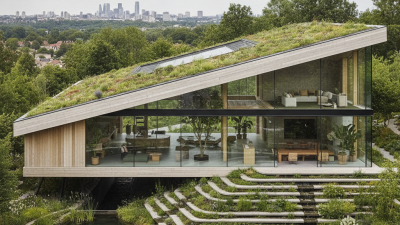
In 2026, futuristic homes will be judged by performance, not appearance alone. A glowing façade means little if the house overheats, leaks data, or wastes energy. Buyers will examine solar glass, heat pumps, adaptive insulation, and rooms that change function. They will also ask uncomfortable questions about repair costs and digital privacy.

The International Energy Agency reports that buildings consume about 30% of global final energy and produce roughly 26% of energy-related emissions. That pressure is reshaping premium residential design. Deloitte’s 2024 Connected Consumer Survey also identifies security and convenience as major reasons for smart-home adoption. Yet connected features still need reliable internet, transparent software support, and local technicians. These details can decide whether innovation feels useful or merely expensive.

Building researcher and author Stewart Brand offered a useful warning: “All buildings are predictions. All predictions are wrong.” His point matters for global buyers comparing the 2026 market. The strongest futuristic homes may combine modular walls, indoor air monitoring, water recycling, and climate-resilient landscaping. They may also look surprisingly ordinary.

This guide evaluates leading concepts through energy performance, material quality, accessibility, resilience, and long-term ownership. It considers dense urban apartments, coastal retreats, and prefabricated countryside homes. Regional building codes and climate risks remain decisive. No single design fits every buyer. That weakness should be admitted. A smart villa in Dubai faces different demands from a low-energy home in Copenhagen. The best choice is not the most futuristic home. It is the one that remains comfortable, repairable, and trustworthy after the novelty fades.
What Are the 2026 Top Futuristic Homes for Global Buyers?

Define 2026 Futuristic Homes Using IEA Energy and Emissions Benchmarks

What Are the 2026 Top Futuristic Homes for Global Buyers?

In 2026, a futuristic home should be judged by performance, not animated lighting or oversized screens. The strongest designs follow IEA energy and emissions benchmarks as a practical reference. They reduce energy demand, support efficient electrification, and prepare for cleaner electricity systems. A credible listing should show annual energy use in kilowatt-hours per square metre. It should also disclose operational carbon emissions and peak electricity demand.

Small details matter. Triple-glazed windows can keep a bedroom comfortable beside a busy road. External shading can prevent afternoon heat through a south-facing glass wall. Heat recovery ventilation can refresh indoor air without wasting warmth. Smart controls may shift water heating toward periods of lower grid emissions. However, technology alone proves little. A low-energy home with poor construction can still suffer from drafts, moisture, and high repair costs.

Location changes every comparison. A home in a cold region needs a different energy strategy from one in a humid tropical climate. Buyers should compare results with local building codes and IEA net-zero pathways, rather than trust one universal score. Embodied emissions also deserve attention, although they are often reported less clearly than electricity use. The label remains imperfect. Real performance can disappoint when occupants change settings or ignore maintenance. Good homes therefore publish measured results, testing methods, and seasonal data. That level of honesty feels more futuristic than a wall-sized display.

What Are the 2026 Top Futuristic Homes for Global Buyers?

The chart uses a normalized operational-emissions index based on the International Energy Agency’s buildings-sector pathway, with 2022 set at 100. IEA analysis indicates that buildings-sector emissions need to fall by about half by 2030 and approach zero by 2050. For 2026, the strongest futuristic-home concept is therefore a highly efficient, all-electric home designed for heat-pump heating, passive solar performance, smart energy management, renewable-energy readiness, and low-carbon operation.

Rank AI-Smart Homes Against IDC IoT Adoption and Matter Standards

For global buyers, the best 2026 futuristic home is not the one with the most screens. It is the one that coordinates lighting, ventilation, security, and energy quietly. IDC’s Worldwide Smart Home Device Tracker reported 892.3 million smart-home device shipments in 2024. IDC expects annual shipments to approach 1.1 billion by 2028. That growth makes compatibility more important than novelty. A beautiful AI kitchen still fails when its sensors cannot share reliable data.

I would rank AI-smart homes by four tests: Matter support, local response, clear data controls, and retrofit cost. Matter 1.4 expands multi-admin management and energy-management capabilities. A buyer could connect blinds, lighting, a heat pump, and a power meter through one control layer. The hallway should respond within seconds. It should also work during an internet outage. Small detail, big difference. IDC’s Worldwide IoT Spending Guide has projected global IoT spending to pass one trillion dollars during this decade. Adoption still depends on trust and interoperability.

AI deserves a higher ranking when it learns routines without making sensitive guesses. It might reduce cooling after detecting an empty study, then restore comfort before a meeting. Occupancy inference remains imperfect. Systems need visible overrides, readable logs, and deletion controls. I would deduct points when model behavior appears behind vague consent screens. That judgment may be strict. Global buyers face different climates, electrical codes, and privacy rules. A future-ready home deserves testing in noisy apartments, rural connections, and mixed-device households.

Compare Net-Zero Modular Homes Using DOE and Passivhaus Criteria

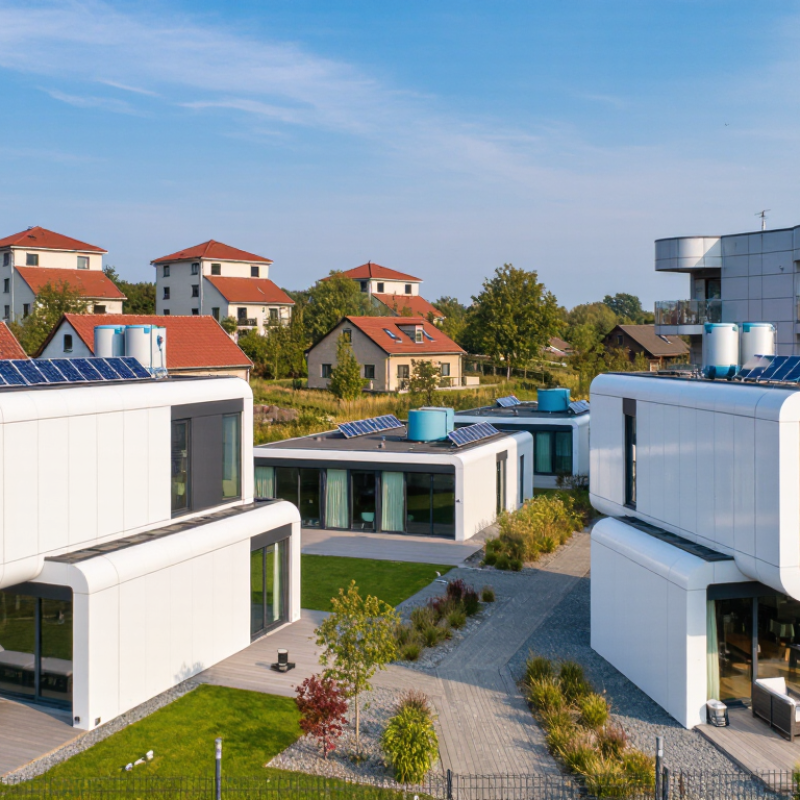
For global buyers in 2026, net-zero modular homes should be judged by measured performance, not glossy renderings. The International Energy Agency reports that buildings consume about 30% of global final energy. Factory production can reduce construction waste, but modular design alone does not create a net-zero home.

The U.S. Department of Energy’s Efficient New Homes criteria emphasize airtight construction, efficient equipment, ventilation, and verified energy performance.

Strong projects may achieve at least 10% better efficiency than the 2021 energy code, depending on the program tier.

Passivhaus sets a stricter benchmark: heating demand should remain near 15 kWh per square metre annually, with airtightness limited to 0.6 air changes per hour at 50 Pascals. These targets demand careful detailing around windows, joints, and service penetrations. Small defects matter.

Tips: Ask for blower-door results, annual energy modeling, and an independent inspection. Check the home’s climate assumptions. A design proven in Finland may underperform in Arizona. Request embodied-carbon data for steel, concrete, insulation, and transport. Operational net-zero is not the whole story. I would also question battery claims, because replacement cycles and local grid conditions can change the result. Reliable certification helps, but measured utility data is stronger evidence.

Assess Climate-Resilient Homes with IPCC Risk and Insurance Data

What Are the 2026 Top Futuristic Homes for Global Buyers?

Future-ready homes should be judged by climate evidence, not dramatic architecture. For global buyers, the IPCC risk outlook offers a useful starting point. It highlights rising exposure to heat, floods, drought, wildfire, and coastal hazards. However, IPCC scenarios are regional, not property-specific. I would combine them with municipal flood maps, geological surveys, and recent disaster records. A home with shaded courtyards may still face dangerous groundwater flooding.

Insurance data adds a practical reality check. Request historical premiums, exclusions, deductibles, and claim patterns for similar properties. Rising premiums can signal hidden risk before visible damage appears. Check whether coverage includes flood, wind, wildfire, and temporary relocation. Some “resilient” features also require maintenance, testing, and local approval. My judgment may be imperfect. Climate models change, and insurers can revise terms quickly.

Tips: Ask for five years of local claims data. Inspect drainage after heavy rain. Confirm backup power, water storage, and passive cooling. Compare future insurance estimates, not only today’s price. Seek an independent surveyor who understands regional hazards. A futuristic home should remain insurable, repairable, and comfortable when infrastructure fails. Design promises are not evidence.

Select Global-Buyer Winners by LEED, Cost, Carbon, and Connectivity

What Are the 2026 Top Futuristic Homes for Global Buyers?

Select Global-Buyer Winners by LEED, Cost, Carbon, and Connectivity

Futuristic homes in 2026 are judged by performance, not dramatic appearance. Global buyers increasingly examine certified energy use, indoor air quality, water efficiency, and construction materials. LEED certification offers a useful benchmark, but buyers should verify the actual certificate and rating level. A polished sales brochure is not technical evidence.

Cost remains highly location-dependent. Import duties, skilled labor, insurance, property taxes, and maintenance can change the ownership budget sharply. Passive cooling, solar shading, heat pumps, and efficient insulation may reduce monthly expenses. However, advanced systems can be expensive to repair when local technicians lack training. That risk deserves a line in every financial model.

Carbon analysis should include both operation and construction. Low-energy living is valuable, yet concrete, steel, transport, and replacement parts also create emissions. Ask for material disclosures and realistic energy projections. Connectivity matters too. Reliable broadband, secure home networks, backup power, and remote monitoring support owners who travel frequently. Still, connected systems create privacy and maintenance concerns. Do not trust vague claims.

Some compromises are unavoidable. A smaller, well-insulated home may outperform a larger glass structure in comfort and emissions. Buyers should compare independent inspections, utility estimates, certification records, and local regulations before signing. Personal experience shows that elegant technology often fails when ordinary servicing is overlooked. Perfection is unlikely. Reliability is the better ambition.

What Are the 2026 Top Futuristic Homes for Global Buyers? — Select Global-Buyer Winners by LEED, Cost, Carbon, and Connectivity
Rank Futuristic Home Type Climate / Market Green-Building Target Indicative Build Cost
(USD/m²)
Operational Energy
(kWh/m²/year)
Embodied Carbon
(kgCO₂e/m²)
Connectivity Profile Global-Buyer Score Best For
1 All-Electric Passive Urban Home
High-performance compact residence
Central and Northern Europe LEED Platinum pathway
Passive-house envelope, heat recovery ventilation, rooftop solar
$2,800–$4,200 ≤15 220–320 Fiber-ready, dense 5G coverage, smart-meter integration, automated shading 94/100 Buyers prioritizing low energy bills and year-round comfort
2 Solar Courtyard Residence
Low-rise home with shared thermal systems
Southern Europe and Mediterranean cities LEED Gold–Platinum potential
Passive cooling, solar control, rainwater storage
$1,900–$3,200 25–45 260–380 Urban fiber access, reliable 5G, solar-battery monitoring, EV-ready parking 91/100 Value-conscious international buyers seeking warm-climate resilience
3 Mass-Timber Smart Home
Prefabricated timber structure
Canada, Scandinavia, and temperate Pacific regions LEED Gold–Platinum potential
Certified timber sourcing, airtight construction, heat pump
$2,400–$3,900 20–40 150–280 Fiber or fixed wireless, smart-home automation, remote energy diagnostics 90/100 Eco-focused buyers seeking a lower-carbon structural system
4 Heat-Resilient Desert Courtyard Home
Passive-first residence for extreme heat
Gulf cities and arid regions LEED Gold target
High-reflectance roof, shaded courtyards, efficient cooling, water reuse
$2,100–$3,700 45–75 300–450 High-speed fiber, strong 5G, building-management system, backup power capability 87/100 Buyers who place climate adaptation and cooling reliability first
5 Flood-Adapted Coastal Home
Elevated or amphibious low-rise residence
Low-lying coastal markets in Asia-Pacific and Northern Europe LEED Gold target
Flood-resilient foundations, permeable landscape, efficient envelope
$2,700–$4,800 30–55 280–430 Fiber where available, 5G backup, flood sensors, remote shut-off controls 86/100 Risk-aware buyers evaluating long-term coastal exposure
6 Net-Zero Modular Residence
Factory-built home with rapid assembly
Australia, New Zealand, and selected North American markets LEED Gold–Platinum potential
All-electric systems, high insulation, photovoltaic generation
$1,700–$3,000 15–35 180–300 Fiber-ready, 5G-compatible, preconfigured home automation, remote maintenance 85/100 Buyers seeking predictable delivery and controlled construction quality
7 Biophilic High-Density Townhome
Compact home near transit and urban services
Major Asian and European metropolitan areas LEED Gold target
Transit-oriented location, green roof, efficient lighting and HVAC
$2,300–$5,000 35–60 300–500 Excellent fiber availability, dense 5G, shared mobility charging, digital access control 84/100 Global professionals prioritizing connectivity, mobility, and amenities
8 Regenerative Rural Retreat
Low-impact home with on-site ecological systems
Rural regions with strong renewable resources LEED Silver–Gold potential
Low-impact site planning, rainwater harvesting, renewable energy
$1,500–$2,800 25–55 120–260 Satellite or fixed wireless backup, solar-battery controls, remote security monitoring 80/100 Buyers seeking privacy, land, and ecological self-sufficiency

Reading the table: Cost figures are indicative 2026 construction ranges in USD per square metre and exclude land, taxes, financing, and unusually difficult sites.

Operational-energy values refer to modeled delivered energy for high-performance all-electric homes; actual results vary with household behavior, climate, and system design.

Embodied-carbon figures cover the principal construction materials and building systems. Lower values generally indicate lower upfront climate impact, but a complete life-cycle assessment is required for a verified result.

LEED entries describe an achievable certification target rather than an automatic certification. Connectivity profiles summarize typical access to fiber, 5G, smart-home controls, and backup communications in the stated market type.

Scoring method: LEED and environmental performance 30%, total cost 25%, carbon 25%, connectivity and resilience 20%. Scores are comparative benchmarks, not investment or certification guarantees.

Seraphinite AcceleratorOptimized by Seraphinite Accelerator
Turns on site high speed to be attractive for people and search engines.