
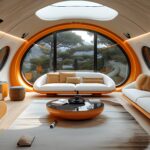



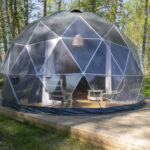
Have you ever imagined a building project that’s quick to complete, easy to customize, and loaded with the latest gadgets? That’s where smart prefab home upgrades come in. Whether you’re planning a hospitality venue with multiple units or dreaming of a luxury dome house in your backyard, these modern marvels promise speed, affordability, and plenty of tech-driven perks.
Meet the new wave of smart prefab home culture
Prefab construction usually means components of your home are built in a controlled factory environment. Then, those pieces get shipped to your location for final assembly. This approach reduces waste and labor costs, often by significant margins. Large-scale businesses eye this efficiency as a way to develop new properties faster, especially in bustling industries like glamping, resorts, or high-end entertainment complexes.
Once your place is delivered, you’ll notice that it’s no ordinary smart home. Integrating connected lighting, heating, security, and water conservation systems transforms your space into a hub of convenience. You can walk through your front door and know your home is ready to greet you with the exact lighting, temperature, and ambiance you like.
What sets them apart
Compared with prefab construction, traditional construction can get pricey, especially in big cities or remote locations. Prefabricated solutions skip a lot of logistical headaches. Because each piece is built indoors, bad weather delays are cut down to nearly zero, and the final structure is assembled in far less time. With all that extra breathing room in your timeline, you can focus on designing features that matter most, like eco-friendly materials or integrated smart features.
The real kicker is technological integration. You can opt for advanced sensors that control lighting, lock your doors remotely, or adjust your curtains to let in just the right amount of sunlight. For businesses, that might mean impressing guests with futuristic amenities. For homeowners, it simply creates a more comfortable, automated lifestyle.
Explore key upgrades for convenience
In a world where everything from your phone to your fridge is getting smarter, it makes sense to want your entire home to rise to the occasion. Below are some popular improvements often found in simple setups of a smart prefab home.
Doors and curtains on demand
A remote control door isn’t just a flashy sci-fi concept. It’s incredibly practical if you’re moving in and out with armloads of supplies, or if you want to grant temporary entry to a maintenance technician while you’re offsite. Coupling that with motorized curtains or blinds makes it easy to optimize natural light or ensure total privacy with a single tap.
- Remote unlock and lock: Perfect for deliveries or unexpected visitors.
- Automatic curtains: Program schedules to open them at sunrise and close at sunset.
With these upgrades, you’ll find your day feels more streamlined. No more fumbling for keys when wrestling with groceries or stumbling around in the dark to draw the curtains at night.
Dimmable LED lighting
Dimmable LED lighting brings multiple benefits to your prefab smart home. You can set mood lighting for relaxing evenings, brighten up the space during work hours, or schedule specialized lighting for events. Plus, LEDs are more energy-efficient than older bulbs, so you reduce electricity usage and monthly costs.
- Voice-activated brightness control: Integrate your lights with a home assistant.
- Scene presets: Create custom lighting “scenes” for movie nights or dinner parties.
For businesses, this is a strong selling point. Imagine promoting a dramatic lighting display that syncs with music at an event space, or simply ensuring your office environment is well-lit for peak productivity.
Personalize control with advanced panels
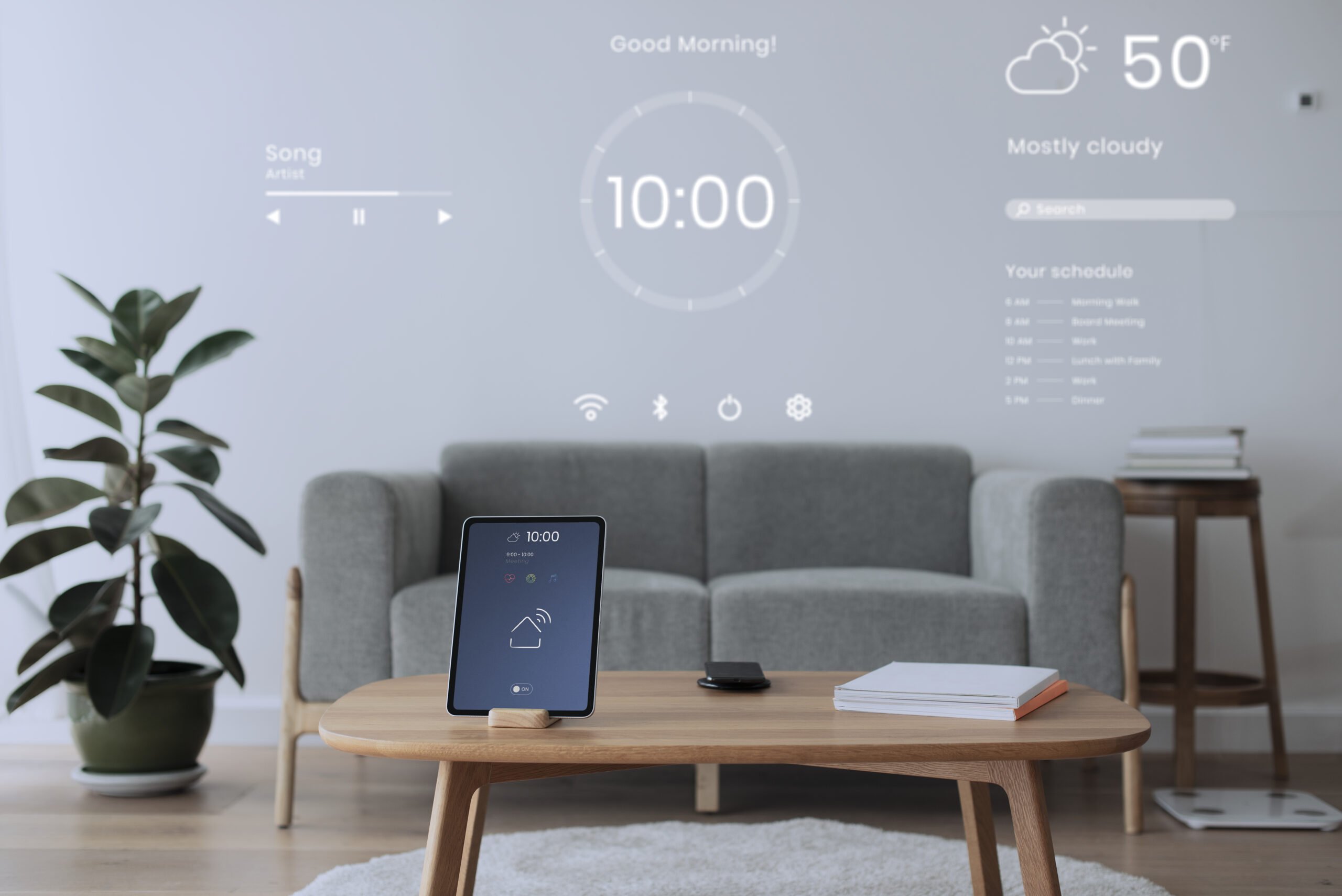
Having everything run automatically is convenient, but sometimes you need quick manual overrides. Central control panels, either wall-mounted or through smartphone apps, let you manage your home’s features with a few swipes or taps.
Why a central hub matters
Think of a central hub as the nerve center for your smart prefab home. When you’re juggling lighting systems, temperature controls, security cameras, and more, you need an easy way to coordinate everything. Without a unifying panel or integrated app, you’d end up installing separate systems and dealing with a digital patchwork.
A single interface ensures your living or working space adapts to your routine, not the other way around. Ready for bed? One tap turns off all lights, locks the doors, adjusts the thermostat, and ensures your security cameras are on guard.
Voice and remote control
A growing number of prefab smart homes integrate voice assistants and remote apps:
- Voice commands: Ask your preferred assistant to lower the shades or dim the lights.
- Smartphone management: If you’re on a business trip, open your app to tweak temperatures, unlock a door for a guest, or review security footage.
This combination of voice and remote management is powerful. It’s especially helpful for large-scale property owners who might have multiple units or buildings to supervise. With a well-organized system, you can scan real-time data and pinpoint issues promptly.
Benefit from faster construction and cost savings
When you opt for a smart prefab home approach, you’re not just getting a tricked-out house. You’re leveraging an entire manufacturing process designed for efficiency. Let’s look at how it cuts both time and costs, a major appeal for businesses and homeowners alike.


Modular efficiency
Modular homes are assembled in sections. Walls, floors, and ceilings are crafted in a factory equipped with AI-driven manufacturing tools. This yields precise measurements, fewer material errors, and less wasted time correcting mistakes on-site. Once the sections arrive at your location, it’s like building with supersized Lego blocks.
- Quick assembly: Prefab sections arrive ready to be connected and secured.
- Reduced weather delays: Indoor construction eliminates season-related slowdowns.
- Quality control: Factory environments test and measure components rigorously.
This is huge if you’re running a commercial resort or want to build multiple dome houses over a tight deadline. You can open for business or move in much sooner than if you relied on traditional construction.
Cutting down labor and waste
Because factory-produced components are standardized, labor requirements normally drop. You don’t need as many specialized contractors for each building stage. Spaces for electrical wiring, plumbing, and even specialized tech (like integrated sensors) come prearranged. These facilitated installations go a long way in lowering final costs.
- Lower labor outlays: Simplified assembly means fewer on-site workers.
- Minimal waste: Surplus materials in a factory are rerouted for other builds instead of being tossed.
- Predictable budgeting: Controlled manufacturing helps keep costs stable and transparent.
For large-scale developments, that predictable budgeting means you can upgrade your units with high-end features without blowing your entire funding.
Adopt eco-friendly measures
An eco smart prefab home prioritizes materials and technology that trim your utility bills and shrink your carbon footprint. Let’s face it, sustainability isn’t a passing fad. It’s a necessity for contemporary building.
Better insulation, better living
A smart prefab home can often include high-performance insulation to keep indoor temperatures comfortable. By maintaining a stable interior environment, you reduce the need for frequent heating and cooling. Pair that with energy-saving appliances and automated systems to see a sizable drop in monthly bills.
- Tight thermal envelope: Material layers seal off air leaks around windows and doors.
- Smart temperature control: A thermostat that adapts to your schedule can lower power use.
- Eco-friendly finishes: Some builders employ recycled or recyclable materials.
If you want to delve deeper into how an automated approach can help you consume less energy, explore these energy-efficient smart prefab homes. They’re designed from the ground up to optimize power usage without compromising on comfort.
Saving water for the future
Water conservation is another cornerstone of a greener living space. From rainwater harvesting to low-flow fixtures, a smart prefab home can come equipped with water-saving solutions. You could even integrate a greywater recycling system to reduce waste in everyday chores like laundry and dishwashing.
- Low-flow faucets: Cut water usage in showers and sinks without sacrificing performance.
- Smart leak detectors: Get alerts on your phone if there’s a potential pipe problem.
- Greywater recycling: Reuse lightly used water for gardening or toilet flushing.
By prioritizing these measures, you win twice: saving money in the long run and showing guests, neighbors, or customers that you care about the environment.
Enjoy an immersive dome house experience
Dome houses have quickly become an eye-catching trend within the prefab industry. They’re often recognizable by their curved silhouettes and panoramic windows. This style is especially popular for resorts, glamping sites, and backyard expansions where you want to wow your visitors at first glance.
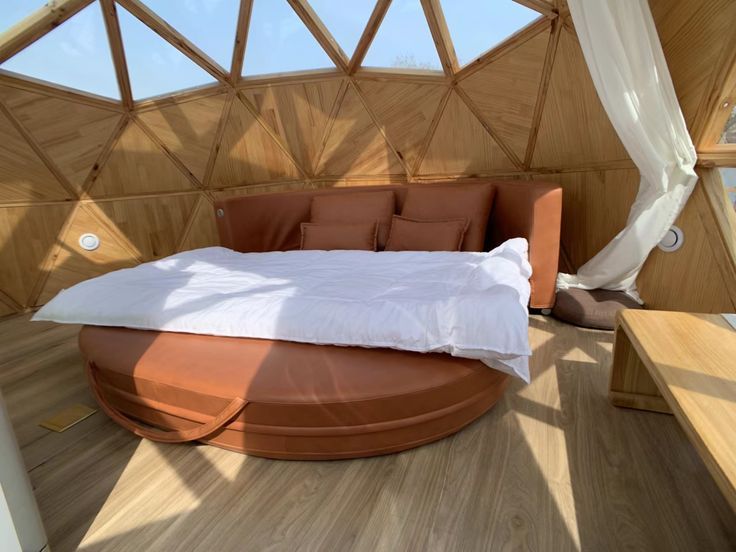
Dome houses aren’t just for show. Their structure can better distribute stresses from wind or snow, making them remarkably durable. Inside, the open-plan layout often feels larger than a rectangular footprint, giving you plenty of flexibility to arrange seating, furniture, or event spaces. Plus, the wide window angles harness natural light for a bright, airy ambiance.
- 360-degree views: Perfect if you have scenic landscapes or city skylines to showcase.
- Simple assembly: Prefab dome panels fit together quickly, often within days.
- Unique aesthetic: Ideal for outdoor camps, luxury lodging, or entertainment-focused properties.
If you need something that immediately stands out, dome houses can add that wow factor without sacrificing comfort or sustainability.
Seize flexible customization
One of the biggest draws of modern prefab building is the array of custom solutions. With advanced tools like AI-driven design software, you can modify layouts and finishes to align perfectly with your goals.
Tailor your design
Smart prefab home technologies let you tweak floor plans with relative ease. If you want a bigger kitchen in a hospitality setting or an extra lounge area for guests, these modifications can happen in the design phase before the factory even starts production. This level of personalization is great for big projects, as it ensures your site or venue remains distinct.
Common design variables:
- Room sizes and ceiling heights.
- Placement of smart features, like voice-activated controls in the master suite.
- Material choices, from eco-friendly timbers to metal frames.
If you’re an investor or a property developer, these customization options help you carve out a niche. You could create a line of distinctive lodging units that connect seamlessly with your brand’s style, from minimalist to luxurious.
Add personal style
Don’t be fooled by the idea of prefab implying a uniform appearance. Beyond structural decisions, you can upgrade finishes and fixtures to match your preferences. Prefer a sleek, ultra-modern vibe? Go with glass partitions and metallic accents. Want a warmer, lodge-like atmosphere? Opt for wood paneling and stone floors.
- High-end finishes: Marble countertops, premium hardwood floors, statement lighting.
- Unique fixtures: Smart faucets, futuristic showers, or custom shelving.
- Landscaping synergy: Design outdoor spaces that merge neatly with your home’s aesthetic.
These features speak volumes in industries like luxury tourism, where visitors appreciate thoughtful design and convenience. Even in a backyard setting, every detail you add reflects your taste and lifestyle.
Step up your security game
When you’re housing guests or relaxing with family, safety and peace of mind matter. A modern smart prefab home can bring security systems into the digital age, helping you monitor everything from your front door to the perimeter of your property.
Smart surveillance and alerts
Many providers incorporate built-in motion detectors, doorbell cameras, and even sensors that track air quality or temperature fluctuations. You’ll receive notifications directly to your smartphone if something’s off. These features don’t just discourage potential intruders; they also help you stay on top of maintenance issues—like a window left open or a water leak in the basement.
- Video doorbells: Check who’s there before opening the door.
- Motion detectors: Trigger lights or alarms if suspicious movement is detected.
- 24/7 recordings: Store video footage in the cloud or on local servers.
Plus, if you’re an owner of a multi-unit lodging facility, a comprehensive security suite ensures a safe environment for guests, which can boost your reputation and keep occupancy high.
Remote monitoring options
Whether you’re across the country or just in another city, you can still keep tabs on your property. Remotely controlled cameras pan and tilt to cover different angles, while integrated microphone-speaker combos let you communicate with whoever’s on-site. It’s pretty handy for giving employees instructions when you’re not physically present.
- App-based feeds: Watch live video from any smartphone, tablet, or laptop.
- Seamless integration: Merge camera systems with your main control panel.
- Custom alerts: Get texts or voice alerts for events like a garage door being left open.
This is a lifesaver if you’re overseeing multiple properties, especially in industries like entertainment or hospitality, where you can’t always be on location.
Reimagine interior comfort
It’s not just about doors that open at a tap or lights that glow on demand. Home comfort expands into areas like heating, cooling, ventilation, and air quality. In recent years, smart prefab homes have evolved to include robust interior systems designed for maximum well-being.
Harness automated climate control
A smart thermostat can go far beyond simply turning on the heat when you’re chilly. Modern models learn your habits, sense room-by-room occupancy, and align your cooling or heating usage to match. Some systems integrate with humidity monitors to help you keep the air crisp in hot summers or cozy in dry winters.
- Zoning capabilities: Direct heat or AC to specific rooms.
- Humidity control: Perfect for areas with high moisture or dryness.
- Learning algorithms: Adjust automatically, no daily tinkering required.
Over time, these climate upgrades slash your energy bills while making sure you never come home to a too-stuffy or too-chilly space.
Air quality sensors for health
Indoor air can be two to five times more polluted than outside air, especially in tightly sealed modern structures. Smart sensors measure factors like carbon dioxide levels, volatile organic compounds (VOCs), or airborne particles. You receive alerts if ventilation is needed, so you can open a window or activate an air purifier.
- Carbon monoxide detection: Critical for safety, especially if you have a gas furnace.
- VOC monitoring: Keep an eye on harmful chemicals sometimes released by paint or cleaning products.
- Automated response: Systems can turn on fans or open vents when air quality dips.
This holistic approach to comfort is a major draw for families. In multipurpose hospitality venues, it offers guests a healthier, more pleasant stay, encouraging them to return for future bookings.
Consider alternative energy sources
When you look at the bigger picture, the debate around renewable energy has grown louder than ever. Prefab construction naturally fits into this conversation, because it’s already about efficient use of resources. Adding solar panels, battery storage, or other renewable systems can make your investment even more worthwhile.
Solar panels and battery storage
Depending on your local incentives, installing solar panels could be a pain-free upgrade. Many prefab designs have built-in frameworks for panel installation. Battery systems can store energy for use in the evenings or on cloudy days.
- Grid tie-in: Sell excess solar back to the utility company if regulations allow.
- Off-grid potential: Some advanced battery setups support partial or complete disconnection from public utilities.
- Lower carbon footprint: Reduce reliance on fossil fuels for a greener future.
Beyond solar: Water and wind
If you’re setting up in a region with consistent breezes, small-scale wind turbines might also be an option. Meanwhile, water-based solutions, like micro-hydropower for properties near running streams, might add value in certain rural or mountainous areas.
- Micro-turbines: Generate electricity in areas with fast-flowing water.
- Wind chargers: Perfect for open terrain with stable wind speeds.
- Hybrid systems: Combine multiple sources for year-round coverage.
Investing in renewable energy not only helps the planet, but it also shows your brand or household’s commitment to sustainability.
Maximize indoor-outdoor flow
For many owners, a large part of the appeal lies in merging indoor elegance with the wonders of the outdoors. Ready-to-install prefab decks, sliding glass walls, and covered patios let you celebrate nature without losing the comforts of your interior space.
Sliding or folding walls
Imagine opening an entire side of your dome house or modular home to reveal a deck facing an ocean, forest, or garden. These collapsible walls transform your living room into an alfresco dining area at a moment’s notice. If you run a resort, it’s a surefire crowd-pleaser for events or weddings.
- Seamless transitions: Flush flooring removes tripping hazards.
- Weather-resistant seals: Keep out drafts when the walls are closed.
- Entertainment-friendly: Effortlessly blend your indoor lounge with an outdoor party space.
Sensor-controlled shading
Patios and outdoor nooks can be enhanced with automated shades or awnings. They’ll retract during windy spells or extend on a hot afternoon, all guided by sensors that measure sunlight or wind speed. Such built-in intelligence ensures valuable deck furniture isn’t exposed to harsh elements, saving you money in replacements or repairs.
- Sunlight sensors: Extend shades to cool your space naturally.
- Wind sensors: Retract awnings to avoid storm damage.
- UV protection: Help block harmful rays for a healthier outdoor lounge.
Imagine advanced entertainment and automation
If you’re building for the entertainment industry or simply love hosting get-togethers, consider layering in advanced audio-visual systems, mood lighting sequences, or universal remotes that tie it all together.
Multi-room audio setups
Speakers can be built right into your walls and ceilings, giving you crisp music or immersive sound for movie nights. With streaming services integrated, you can queue a playlist from your phone and have it play simultaneously in every room—or just the one where you’re hanging out.
- Zoned audio: Choose which spaces get the tunes or announcements.
- Hidden wiring: Keep your interior sleek with concealed harnesses.
- App or voice control: Turn on music while cooking without fumbling for switches.
Automated scene creation
One of the most satisfying aspects is linking several systems for a single command, sometimes called a “scene.” Picture this: You say, “movie time,” and the lights dim, curtains close, projector screen drops, and the sound system cues up. All in a matter of seconds.
- Preset library: Create themes like “romantic dinner,” “morning workout,” or “after-party.”
- Scheduling: Automate scenes to start or stop at preset times.
- Interactive triggers: Sync your lights to blink or change color with music beats.
Such intricacies turn your home—from living room to large event hall—into a dynamic space that keeps guests enthralled.
Factor in future-proofing
Technology moves fast. A cutting-edge feature today might feel outdated in five years. That’s why a good prefab approach includes modular systems you can update without gutting your entire house.
Swappable modules
Rather than building everything permanently into your walls, consider modules that snap in and out. For instance, an older thermostat can be removed and replaced with a newer model in minutes, no major rewiring needed. The same goes for control panels, speakers, or even certain insulation types.
- Easy upgrades: Plug-and-play modern replacements.
- Lower cost: No large-scale renovation whenever you swap a piece of home tech.
- Adaptable to future trends: Add new sensors or features as they become available.
Ample capacity
Smart devices can demand stable internet connections, additional wiring, or even bigger fuse boxes. Plan for expansion from the start. Oversize your electrical panel by a small margin, and lay down adequate Ethernet or fiber cables for potential data-hungry systems. That pre-planning makes it a breeze to integrate new features in the years ahead.
- High-speed Wi-Fi coverage: Important for remote door operations or streaming.
- Battery backups: Keep critical systems online during power outages.
- Scalable networks: Hook up an extra module or server if your property grows.
Conclusion
When you bring together modular construction, integrated gadgets, and eco-conscious materials, you get a smart prefab home that does more than just look good. It’s a living space that learns your habits, streamlines your chores, and minimizes your environmental impact. Businesses can create next-level hospitality offerings or spectacular entertainment venues, while homeowners gain a sanctuary with minimal fuss and maximum wow factor.
If you’re ready to take your dome house dreams or luxury backyard project to the next level, check out the cutting-edge offerings from bahria homes Castle. From lightning-fast installation to eye-catching designs that incorporate 360-degree panoramas, bahria homes Castle merges style, convenience, and sustainability in ways that truly stand out. It’s proof that smart prefab home concepts aren’t just futuristic fantasies, but practical, high-value investments ready for you right now. All that’s left is deciding which upgrades spark your imagination most. Happy building!